
Medicinal Cannabis
One remarkable plant. More than one kind of medicine.
Cannabis has a long history as a medicinal plant. For much of the modern debate, we’ve been stuck asking whether it’s good or bad. The more interesting question is what this remarkable plant can do.
In Australia, cannabis is now available on prescription, and many people are curious about whether it could help with anxiety, sleep, trauma or the stress of living with pain. Some people find it genuinely helpful. Its best-researched uses so far are for physical conditions, such as certain severe forms of epilepsy. Here, we focus on what it might offer your mind.
CBD and THC. What’s the difference?
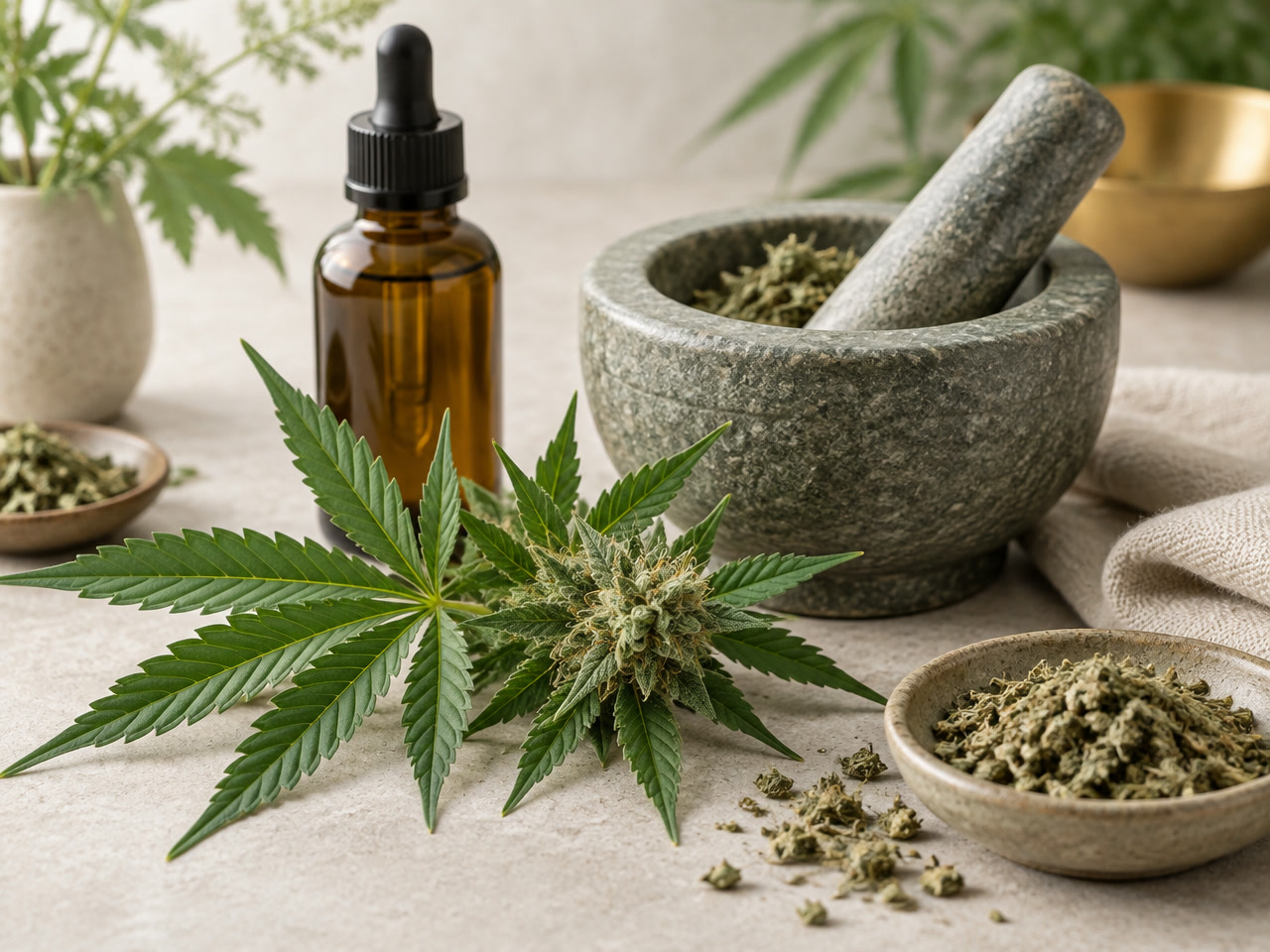
01CBD (cannabidiol) doesn’t produce the high associated with THC. It’s being studied for anxiety, and early results are encouraging. It can still cause side effects, such as tiredness, and interact with other medicines.
THC (tetrahydrocannabinol) is the main intoxicating compound in cannabis. Many people find it relaxing. For some, especially at higher doses, it can bring on anxiety or paranoia, and it can affect attention, memory and reaction time. The dose, the balance of THC and CBD, and how you take it all matter.
What the research is beginning to show
02Anxiety. Research on CBD for anxiety is early and promising. In an Australian trial, young people whose anxiety hadn’t improved with therapy or medication reported feeling less anxious after 12 weeks of CBD. Larger trials with a comparison group are the next step.
Mental health more broadly. Research into cannabis for mental health is still young. A major Australian review found there isn’t yet enough good-quality evidence to show it improves depression, anxiety disorders or PTSD, and called for more high-quality studies. There were early signs of a small improvement in anxiety for people living with other health conditions, such as chronic pain.
Sleep. Many people use cannabis to help them fall asleep, and some find it helps. So far, clinical trials haven’t shown a clear benefit for insomnia, so it’s worth looking at the bigger picture of your sleep too. Our Sleep & Restoration page is a good place to start.
Australian guidance. The Royal Australian and New Zealand College of Psychiatrists has called for more research and a careful, considered approach to prescribing, particularly for anxiety.
This is an area where research is still catching up with people’s experiences. We’d love to see much more of it, so people have clearer answers about who cannabis can help, and how.
Palliative care and the side-effect question
03In palliative care, comfort can mean different things to different people. One person might want enough relief to sleep. Another might want to stay alert for a conversation with family. Those priorities deserve to shape the decision. The evidence for chemotherapy nausea is clearer than it is for cancer pain or general symptom relief. In one Australian palliative care trial, CBD oil added to usual care didn’t improve overall symptom distress in people with advanced cancer compared with placebo.
Could a cannabis medicine be easier to tolerate? For an individual, it might be. There are too few good head-to-head studies to say cannabis medicines generally cause fewer side effects than conventional pain medicines. The useful question for a prescriber or palliative care team is “What might this particular product do for the symptom I care about, and what would I be trading for that relief?”
What to keep an eye on
04- Your mental health. Frequent use of high-THC cannabis is linked with a higher risk of psychosis, particularly for young people. If you’ve experienced psychosis or another serious mental health condition, make sure your prescriber knows.
- How it affects your anxiety. THC can ease anxiety for some people and heighten it for others. If you notice more worry, paranoia or panic, let your prescriber know.
- Tolerance and dependence. With regular THC use, you may need more to get the same effect. Cravings, taking more than planned or finding it hard to cut back are worth bringing up early. If substance use has been hard to manage before, tell your prescriber so you can agree on what to monitor.
- Teens and young adults. Frequent cannabis use during adolescence raises particular concerns about attention, learning and dependence. Earlier and more frequent use is also linked with a higher risk of psychosis.
- Other medicines and driving. Ask a pharmacist or prescriber to check for interactions, particularly with medicines that already make you drowsy. If a product contains THC, discuss driving safety and check the rules where you live.
If you’re curious about medicinal cannabis, start with the change you’d actually like to feel. Ask which formulation has evidence for that goal, what side effects to watch for and when you’ll review whether it’s helping.
You’ve read about it. Now what can you actually do?
You don’t need to have the perfect plan. Choose the next step that feels most useful for where you are right now.
Always speak with a qualified health professional before starting something new. If you are struggling right now, find immediate support.
Want to keep exploring?
Recommended articles, books, podcasts and lived experiences related to this topic.
Explore the LibraryRelated Tools
This is educational information. It is not a recommendation that this approach is right for you. Always speak with a qualified health professional.
