
Sleep & Restoration
Sleep is one of the foundations of Mental Wealth. It shapes how we think, feel, cope and move through the world.
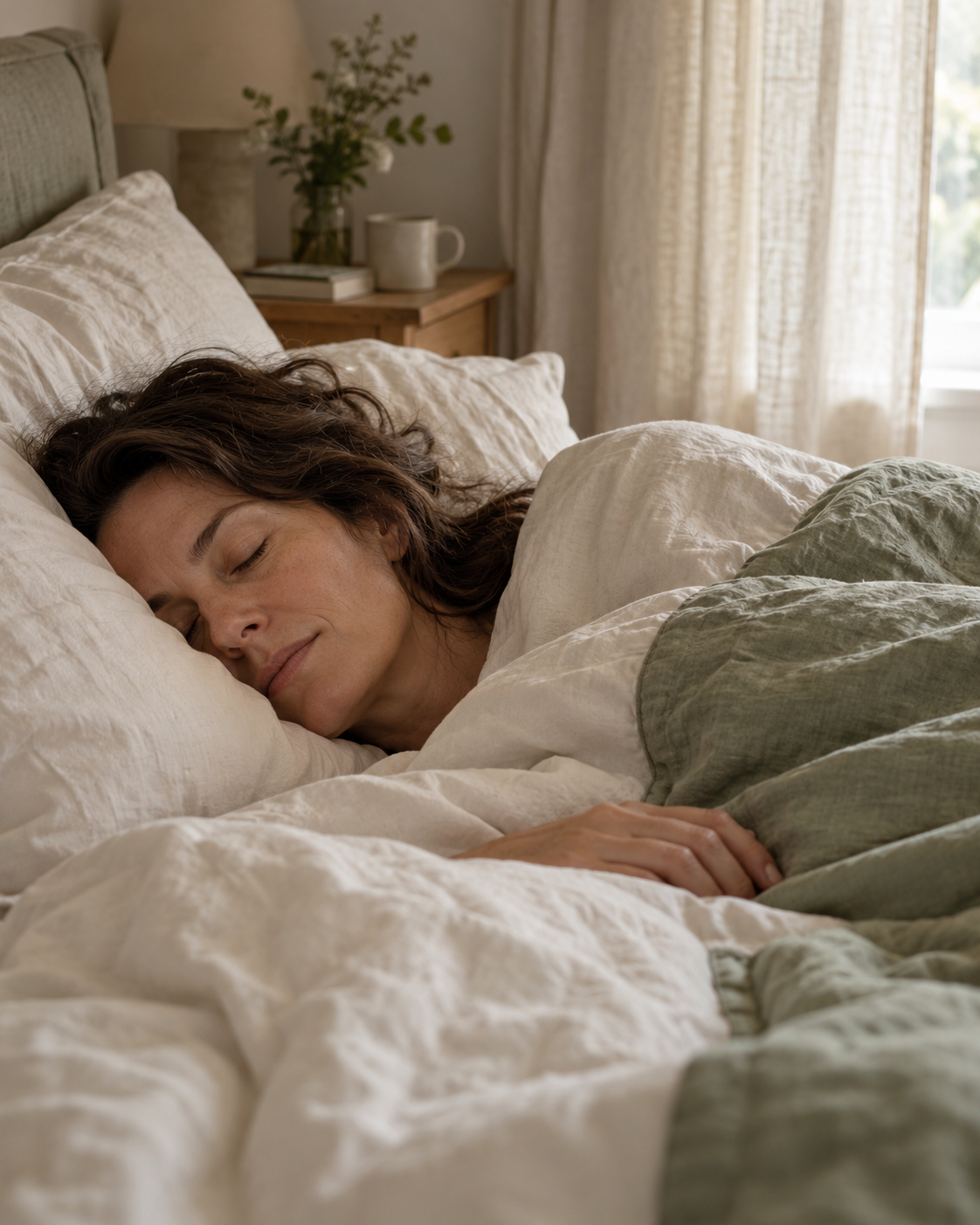
What is it?
01Sleep is everything. Anyone who has gone without enough of it knows how quickly life can start to feel harder. Your patience disappears, your thoughts get foggy, your emotions sit closer to the surface and even the smallest task can feel like a mountain.
There is a reason sleep deprivation has been used as a form of torture. When we are consistently denied sleep, the impact on the mind and body can be profound.
Sleep is when your brain and body carry out essential work: processing memories, regulating emotions, supporting physical repair and preparing you for another day. It is not just about how many hours you get. The quality and regularity of your sleep matter too.
Most adults generally need seven to nine hours a night, although individual needs vary. And there are seasons of life when getting those hours is much easier said than done.
Motherhood. Grief. Stress. Hormonal changes. Illness. A mind that refuses to switch off, even when your body is desperate for rest. Sometimes sleep feels completely out of reach, and the last thing you need is another person telling you to "just get an early night".
Sleep and mental health have a two-way relationship. When you are not sleeping, everything can feel harder to carry. And when you are carrying too much, sleep can become harder to find.
That is not a personal failure. It is a reminder that sleep deserves attention in its own right, alongside whatever else is happening in your life.
What may it help with?
02Sometimes we do not realise how much sleep is affecting us until we stop and ask:
Why am I so short with everyone? Why can't I hold a thought? Why does everything feel overwhelming at two in the morning, and somehow more manageable when the sun comes up?
Supporting sleep may help with:
- Mood and emotional regulation
- Stress tolerance
- Concentration and memory
- Energy and daily functioning
- Symptoms of anxiety and depression
Sleep is not a cure for every difficulty, and improving it will look different for everyone. But when we are running on empty, it can be much harder to access the patience, perspective and resilience we need to navigate life.
How does it work?
03Sleep is active, even when we are not. While we rest, the brain processes information and memories, and the body carries out important restorative processes. Sleep also plays a role in the systems that regulate stress, appetite and emotions.
When sleep is short or repeatedly interrupted, many of us become more reactive and find it harder to concentrate or cope. If you have ever cried over something small after a terrible night, you will know the feeling.
Your sleep is influenced by an internal body clock, known as your circadian rhythm. It responds to cues such as light, activity and regular patterns of waking and sleeping.
But sleep is not controlled by the clock alone. Stress, hormones, pain, medication, grief, children, shift work and sleep conditions can all play a part. That is why being exhausted does not always mean you can fall asleep.
And the more pressure we put on ourselves to sleep, the more alert and frustrated we can become. Sometimes the most helpful first step is to stop treating wakefulness as a battle.
What does the evidence say?
04Sleep is one of the best-researched foundations of mental health, and the evidence suggests that supporting it can make a meaningful difference.
A 2021 review brought together 65 randomised trials involving 8,608 people. It found that improving sleep led to improvements in mental health, including symptoms of depression, anxiety and rumination. On average, greater improvements in sleep were associated with greater improvements in mental health. [1]
Another review examined cognitive behavioural therapy for insomnia, or CBT-I, in people experiencing both depression and insomnia. Across 19 trials involving 4,808 people, CBT-I improved both sleep and depressive symptoms. At the end of treatment, around 32% of people receiving CBT-I had a depression response, compared with 17% in the comparison groups. [2]
That does not mean sleep is the only answer, or that everyone will respond in the same way. It does tell us that sleep is worth addressing directly, rather than assuming it will eventually improve once everything else does.
What about women's sleep?
Hormonal changes during the menstrual cycle, pregnancy, perimenopause and menopause can affect sleep. Hot flushes and night sweats can interrupt it too. If you are waking at 2 am wondering why you are suddenly wide awake, you are certainly not alone.
Women's experiences have not always received the attention they deserve in health research and treatment. If standard advice is not working for you, it may be time to look more closely at what is happening in your body and life. [3]
So how do we get a good night's sleep?
05There is no perfect formula, and the aim is not to turn bedtime into another job on your to-do list.
Start with one or two things that feel manageable. Small, consistent changes can help create the conditions for sleep, even if they do not solve everything overnight.
Create a rhythm where you can
Your body clock responds to patterns. Getting up around a similar time each day and creating a gentler transition into the evening can help.
If your nights are unpredictable because of children, caring responsibilities or shift work, do what you can with the rhythm available to you. This is about support, not perfection.
Let natural light guide your body clock
Getting outside in the morning light can help your body recognise that it is time to be awake. It does not have to be a complicated ritual: have your morning cuppa outside, take a short walk or step into the daylight while you start your day.
Time outdoors in the afternoon can feel good too, although morning light is a stronger cue for shifting your body clock earlier. [4]
You do not need to look directly at the sun. Just being outdoors in daylight is enough, while taking sensible sun protection measures.
Give your screens a bedtime too
It is easy to finish the day by scrolling, answering messages or watching just one more episode. But bright light from screens can interfere with the body's signals for sleep, and the content itself can keep our minds engaged when we are trying to wind down.
If you can, put your phone, laptop or television away for the hour before bed. Dim the lights and give yourself a gentler transition from the day. [5]
And if an hour feels unrealistic, start smaller. Even putting your phone down for the last 15 minutes gives you a little space to breathe.
Make your space feel restful
A cool, dark and quiet room can make sleep easier. Clean sheets, softer lighting or a comforting scent might help your bedroom feel like somewhere you can switch off.
During perimenopause or menopause, lighter bedding and a cooler room may also help if hot flushes or night sweats are disturbing your sleep.
Look at what might be keeping you awake
Caffeine can stay in your system longer than you expect. That afternoon coffee may feel like a good idea at the time, until you are staring at the ceiling at midnight.
Alcohol can make you feel sleepy initially, but it can also disrupt sleep later in the night. Stress, late-night work, pain and hormonal changes can all be part of the picture too.
Give your mind somewhere to put things
If your thoughts get louder as soon as your head hits the pillow, try writing them down before bed. A notebook beside the bed can help you capture a thought, reminder or worry without feeling you need to solve it at 2 am.
You might try asking: Is there anything I need to do about this right now, or can it wait until morning?
Natural ways to support sleep
06There are tools that may help your body and mind settle. Some have more research behind them than others, and none will work for everyone. The aim is to find what feels supportive for you.
Slow, gentle breathing
When you feel wired, anxious or caught in a loop of thoughts, slowing your breath can give you a moment of calm.
Try this:
- Breathe in gently through your nose for around four counts.
2. Breathe out slowly for around six counts.
3. Continue for a few minutes, without forcing the breath.
The numbers are a guide, not a test. If counting makes you feel tense, let it go and simply breathe in a way that feels comfortable.
Breathwork is not a guarantee of sleep, but it may help you feel more settled while you are awake. Relaxation techniques are also sometimes included in CBT-I. [6]
Progressive muscle relaxation
If your body feels tense, try gently tensing and then releasing different muscle groups, beginning with your feet and moving up through your body. Notice the feeling of letting go each time.
You do not need to do it perfectly. The point is to bring some attention to your body and create an opportunity to soften.
Gentle movement
A little stretching, restorative yoga or another gentle movement practice in the evening may help you unwind. For some people, a walk or regular movement earlier in the day also supports sleep.
Choose what feels good in your body rather than pushing through a routine.
A warm bath or shower
There is something about warm water that can help us slow down. A bath or shower before bed can become a simple ritual that signals the day is coming to an end. Research also suggests a warm bath or shower before bed may help some people fall asleep. [7]
If you enjoy Epsom salts, add them to your bath and make it a moment for yourself. The relaxing soak may feel lovely, although there is not good evidence that an Epsom salt bath delivers meaningful amounts of magnesium through the skin. [8]
No bath? A warm shower or foot soak can still give you a chance to pause and unwind.
Lavender and calming scents
Lavender is a familiar favourite for winding down. You might enjoy it as a pillow spray or in a diffuser, or choose another scent that feels calming to you.
Some studies suggest aromatherapy may help with sleep, although the research is mixed and more rigorous studies are needed. [6] Sometimes the value is also in the ritual: taking a few moments to make your space feel peaceful and inviting.
Essential oils are concentrated, so follow product directions, avoid swallowing them or applying them undiluted to your skin, and stop using them if they cause irritation or headaches. Take extra care around children and pets.
Massage and soothing touch
When stress has settled into your shoulders, jaw or back, it can be difficult to feel comfortable enough to drift off. A remedial massage, gentle relaxation massage or even a simple hand or foot massage may help you unwind.
You do not need an expensive treatment. Try slowly massaging your own hands or feet with moisturiser, or ask someone you trust for a gentle shoulder massage. The aim is to give your body some attention and see what helps it feel more at ease.
Calming music or a guided body scan
Soft music, nature sounds or a guided body scan can give a busy mind somewhere gentle to land. In a body scan, you bring your attention to different parts of your body, noticing what is there without needing to change it.
Some research suggests listening to music may improve people's experience of sleep quality, although it will not suit everyone. [6] If a guided practice or sound keeps you alert, switch it off. You are allowed to find your own version of quiet.
A caffeine-free evening tea
A warm cup of herbal tea, such as chamomile, can be a comforting part of a wind-down routine. The ritual itself may help you slow down, although evidence that chamomile reliably treats insomnia is limited.
If you are pregnant, take medication or have allergies, check with a health professional before using herbal products. And if waking to use the bathroom is already disrupting your sleep, enjoy your tea a little earlier in the evening.
Magnesium
Many people use magnesium in the hope it will help them relax or sleep, and some find it useful. The research on magnesium supplements for insomnia is still limited, so we cannot say with confidence that it works for everyone. [9]
If you are considering it, speak with a pharmacist or health professional about the right product and dose for you. More is not necessarily better: larger supplemental doses can cause side effects and may not be suitable for everyone, particularly people with kidney problems or those taking certain medicines.
Melatonin
Melatonin is a hormone involved in signalling to your body that it is time to sleep. As a supplement or medicine, it may be useful in some situations, including certain disruptions to the body clock.
It is not a universal solution for ongoing insomnia, and timing matters. Speak to a pharmacist or doctor about whether it is appropriate for you and how to use it. Access and prescribing rules vary by country. [6]
The intention with all of these is the same: create the conditions for rest, without putting more pressure on yourself to sleep. Choose what you enjoy and what is accessible to you. A quiet shower and a few slow breaths can be a meaningful place to start.
When you can't sleep, stop fighting it
07This might be one of the most useful things to remember: you cannot force yourself to sleep.
If you have been lying awake and can feel yourself becoming frustrated, it may help to get up for a while. Keep the lights low and do something quiet and calming, such as reading, listening to a gentle meditation or sitting somewhere comfortable. Return to bed when you feel sleepy again.
Try not to watch the clock or calculate how little sleep you have left. It is an easy trap to fall into, but it can make the pressure worse.
And if you do end up checking emails or doing some work at 2 am, you are human. Sometimes it happens. Just notice whether it leaves you feeling more alert, and see if there is a gentler option you can turn to next time.
There is also a difference between tired and sleepy. You can feel completely drained but still have a mind and body that are switched on. Giving yourself space to wind down, rather than demanding sleep on command, may help.
Rest still has value, even when you are awake. It does not replace sleep, but taking the pressure off can make the night feel a little less like a fight.
Can you catch up on lost sleep?
08When you have been sleep-deprived, allowing yourself extra rest and returning to a more regular sleep pattern can help you recover. But one long sleep does not necessarily undo the effects of weeks, months or years of disrupted sleep.
After ongoing sleep loss, you may feel less sleepy before your concentration and performance have fully recovered. This is why consistently protecting sleep, where possible, matters more than hoping to fix everything in one weekend. [10]
And if you have been through a long season of broken sleep, please give yourself compassion. Recovery is not always instant. Your body may need time, support and a closer look at anything else that is affecting your rest.
When to look for more support
09If sleep has been difficult for weeks, is affecting your ability to function, or you are concerned about what is happening, speak to your GP or a sleep specialist. You do not have to wait until you are completely exhausted.
It is especially worth checking in if you snore loudly, wake gasping, experience significant daytime sleepiness, or suspect that pain, medication, anxiety or hormonal changes are affecting your sleep.
CBT-I: support designed specifically for insomnia
CBT-I is a structured treatment that helps address the patterns and thoughts that can keep insomnia going. It can involve a sleep diary, strategies for reconnecting bed with sleep, and changes to time spent in bed, guided by a trained professional.
It is different from general sleep tips and is one of the most strongly recommended treatments for ongoing insomnia. It may be available through psychologists, sleep clinics and structured online programs. Ask your GP about options and whether a rebate applies. [11]
Medication can also have a place for some people. There is no shame in needing support. The right approach depends on your circumstances, and a health professional can help you explore the options.
Founder’s Insight
Sleep is one of those things you do not fully appreciate until you start losing it.
My relationship with sleep changed when I became a mother. My first child experienced night terrors for years, and the ongoing sleep deprivation changed me immensely. I felt the impact in my mind, my body, my patience and my ability to think and cope. When you are a parent, you often just keep going because you have to, but that does not mean the lack of sleep is not affecting you.
I sometimes wonder whether you ever really get those years of lost sleep back. What I do know is how deeply they affected me, and how much I value sleep now.
These days, perimenopause has brought its own challenges. Sometimes I cannot fall asleep until two in the morning. Other times, I wake at two and simply cannot get back to sleep. I have learned that lying there fighting it often makes everything worse. Sometimes I try magnesium, peanuts or breathwork. Sometimes I get up, and if I am honest, sometimes I do the thing you are probably not supposed to do and start working or watching something till I'm tired again.
The older I get, the more I understand that sleep is not a luxury. It is one of the foundations of how we think, feel and cope. If we are serious about our Mental Wealth, sleep needs to be near the top of the list.
You’ve read about it. Now what can you actually do?
You don’t need to have the perfect plan. Choose the next step that feels most useful for where you are right now.
Always speak with a qualified health professional before starting something new. If you are struggling right now, find immediate support.
Want to keep exploring?
Recommended articles, books, podcasts and lived experiences related to this topic.
Explore the LibraryRelated Tools

This is educational information. It is not a recommendation that this approach is right for you. Always speak with a qualified health professional.
