
Herbs & Medicinal Plants
Some of the most interesting plant remedies are already in your kitchen.
Fresh ginger. A tin of chamomile. The saffron you bought for one recipe and promptly forgot about. People have turned to plants for nourishment and relief for generations, and some of those familiar ingredients are finding their way back into modern research.
Next time you’re wound up, can’t switch off at night or your stomach is in knots, get curious before you rush to the chemist. Try Googling, “Is there a herb or plant that might help with this?” Then look a little closer. Was it the tea, the whole plant or a specific extract that researchers studied? A quick search can open up options you hadn’t considered. And if you do head to the chemist, you’ll have a better question to ask.
Winding down, sleep & mood
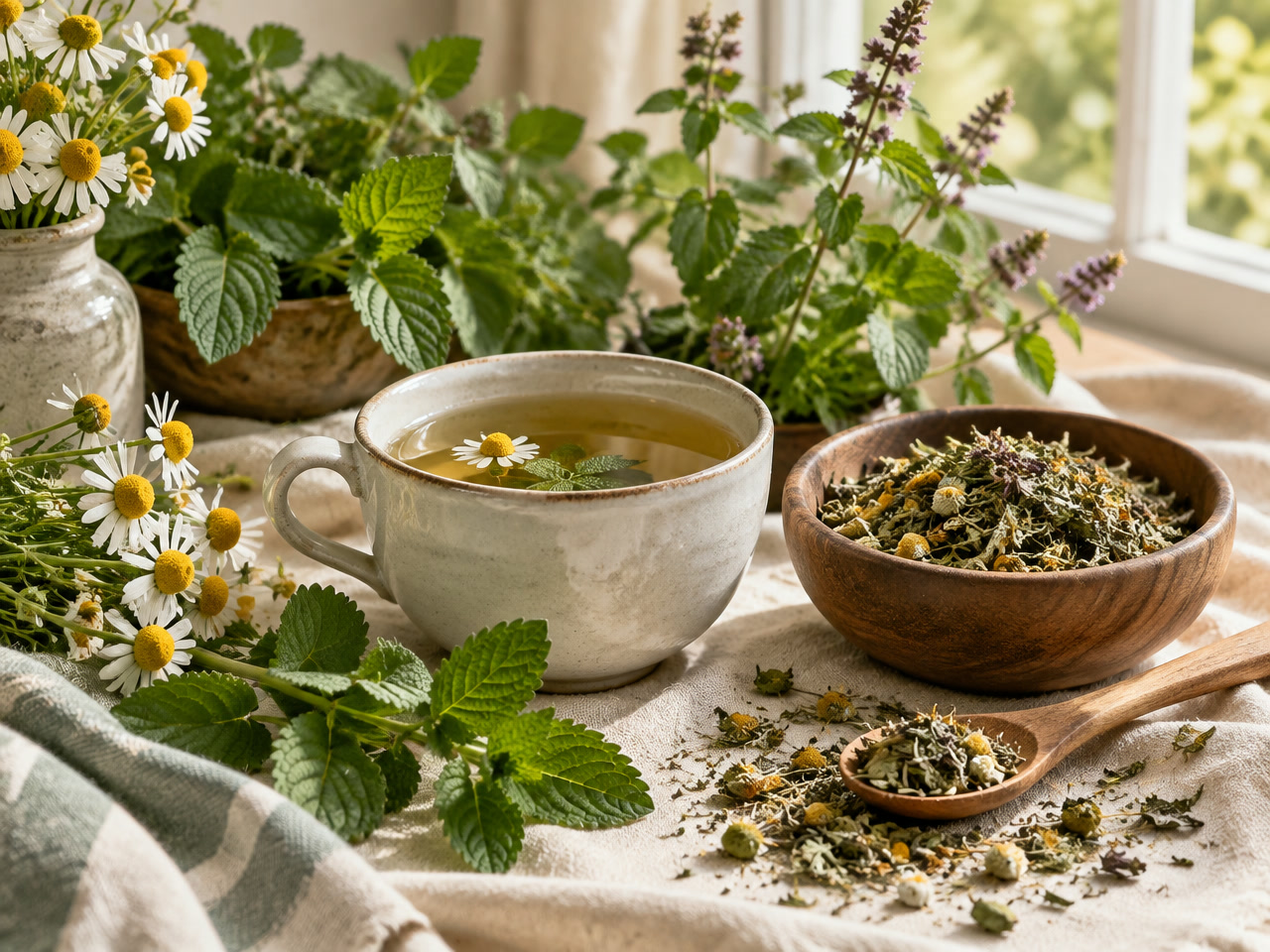
01- Chamomile · A familiar evening tea and a simple way to mark the end of the day. There’s early research on chamomile preparations for anxiety, but clinical evidence remains limited, especially for insomnia.
- Lemon balm · A lemon-scented leaf you can brew on its own or find in herbal tea blends. Its use for mild stress and sleep is based mainly on tradition.
- Passionflower and valerian · Often found in evening tea blends, with a history of use for mild stress and sleep. If you take sleeping tablets or other medicines that make you drowsy, ask a pharmacist before adding a medicinal preparation.
- Saffron · This kitchen spice is having a moment. In one 12-week trial, adults with low mood who took a standardised saffron extract reported greater improvement in depressive symptoms than those who took a placebo. A separate short trial found modest improvements in insomnia symptoms. Both tested specific extracts. The threads in your risotto are a different preparation.
Your gut and how you feel
02Your gut and your brain are in constant conversation. It’s one reason stress so often shows up in your stomach, and why an unsettled gut can make it hard to feel settled anywhere else.
- Peppermint · Fresh leaves or tea are familiar after a meal. For irritable bowel syndrome (IBS), the better evidence is for specially coated peppermint oil capsules, which may help with symptoms such as abdominal pain.
- Ginger · Look for fresh root, dried ginger or tea. A warming cup many people reach for when their stomach is unsettled. Ginger may help with nausea and vomiting in pregnancy, though much of the research tested measured preparations. If you’re pregnant and considering a medicinal ginger product, ask your midwife or pharmacist about the specific product.
- Fennel seed · Often brewed as tea and traditionally used for mild bloating and wind. It’s a longstanding use with limited clinical evidence.
The plants we eat
03What you eat every day shapes your energy, your gut and how you feel. You’ll find more on our Nutrition & Gut Health page.
Flaxseed (linseed), chia and hemp seeds belong here for what they bring to the plate. Flax and chia add fibre, while hemp seeds add protein and fats. Stir them through porridge or yoghurt, or scatter them over a salad. Some of the most useful plants are simply the ones you enjoy eating often.
Turmeric has a long history in cooking and traditional medicine, and concentrated turmeric and curcumin supplements are now everywhere. If you’re considering one, know that Australia’s Therapeutic Goods Administration warns of a rare risk of liver injury with medicinal turmeric or curcumin products. This risk does not appear to apply to typical amounts used in food.
Before you bring something home
04Check what fits with what you already take. If you’re pregnant, buying for a child or taking regular medicines, show the exact product to a pharmacist or your treating clinician. A familiar plant can behave differently when it’s concentrated.
You’ve read about it. Now what can you actually do?
You don’t need to have the perfect plan. Choose the next step that feels most useful for where you are right now.
Always speak with a qualified health professional before starting something new. If you are struggling right now, find immediate support.
Want to keep exploring?
Recommended articles, books, podcasts and lived experiences related to this topic.
Explore the LibraryRelated Tools
This is educational information. It is not a recommendation that this approach is right for you. Always speak with a qualified health professional.
