
Essential Oils & Scents
A scent can change the feel of a moment.
Eucalyptus can take you straight to the bush. Sweet orange can make a room feel brighter. And the scent you return to each evening can become part of how you tell yourself, I’m done for today.
Your sense of smell has a direct line to the parts of the brain involved in emotion and memory. It may be one reason a scent can shift how you feel before you’ve even named it.
Essential oils are concentrated aromatic extracts from plants. People use them to scent their homes, make a warm bath feel more restorative or bring a little more pleasure to a hand or foot massage. Researchers are also exploring whether particular scents can ease short-term anxiety or bring comfort in stressful moments. There’s room for both the research and the simpler question. How does this scent make me feel?
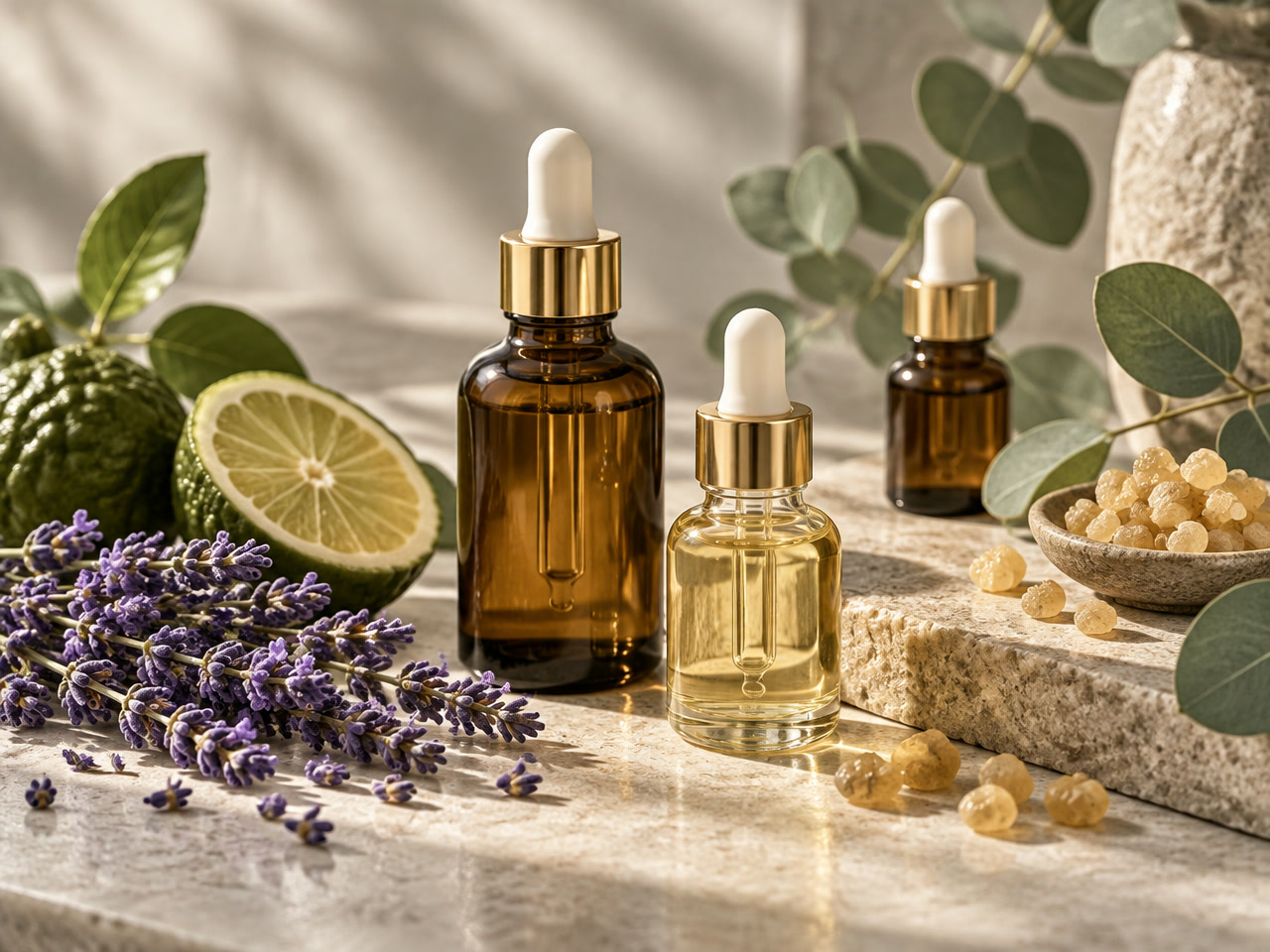
Find a scent that fits your moment
01Start with what you need right now. Do you want to slow down, lift your mood or mark the end of a long day? Then think about what you actually like to smell. Lavender may feel comforting to one person and remind another of their grandmother’s linen cupboard. Either way, your reaction matters.
| What you’re looking for | Essential oils to explore | A moment to try them |
|---|---|---|
| What you’re looking forA softer landing | Essential oils to exploreLavender, Roman chamomile, neroli, petitgrain | A moment to try themWhen you’re winding down or moving from work into the evening. |
| What you’re looking forSomething warm and grounding | Essential oils to exploreFrankincense, cedarwood, sandalwood, vetiver | A moment to try themWhile journalling, meditating or taking a quiet moment to yourself. |
| What you’re looking forA brighter start | Essential oils to exploreSweet orange, mandarin, grapefruit, lemon, bergamot | A moment to try themWhen you’re getting ready in the morning or want to freshen a room. |
| What you’re looking forSomething floral and comforting | Essential oils to exploreDamask rose, geranium, ylang-ylang | A moment to try themIn a formulated bath soak or a pre-diluted body oil for a slow hand massage. |
| What you’re looking forA crisp, outdoorsy scent | Essential oils to exploreEucalyptus, rosemary, peppermint, pine | A moment to try themWhen you want the room to feel fresh. These scents can be strong, so start lightly. |
This is a starting list. There’s a whole world of scents and blends to explore. Try looking up “woody essential oils for an evening ritual” or “fresh citrus scents for my desk” and see what you’re drawn to. If you want help with something specific, search for the oil, the method and what you’d like help with together. “Inhaled lavender for sleep research” will tell you more than “best oil for sleep.” Check whether a claim comes from a human study, traditional use or the person selling the bottle.
Make it part of a ritual
02In a warm bath. Warm water, plain Epsom salts if you like them, and a scent you enjoy can make for a deeply soothing soak. If you want fragrance in the water, choose a bath oil or scented soak formulated to disperse and follow the label. Water and plain salts don’t disperse essential oils. Drops added straight to the bath or mixed into plain salts can still land on your skin undiluted and sting. You can also keep the salts plain and enjoy the scent separately.
Around the home. Try a little scent for a short time in a ventilated room. Follow your diffuser’s instructions and give the people sharing the space a say. A piece of fresh orange peel, a sprig of rosemary or a dried lavender sachet can be enough if you prefer something more subtle.
On the skin. Try a hand or foot massage with a ready-diluted body oil. If you’re making your own blend, use a carrier oil such as jojoba and check the dilution guidance for that specific essential oil. Water doesn’t dilute essential oils for rubbing onto skin. Keep blends away from eyes and broken skin, and check for sun precautions. Some citrus oils, including cold-pressed bergamot, can make skin more sensitive to sunlight.
As a cue to pause or remember. The smell of a particular soap, the bush after rain or someone’s perfume can bring a memory back before you’ve found the words for it. Research suggests smells can evoke especially emotional memories. You might use a familiar scent during journalling, breathwork or a remembrance ritual. Choose one that feels welcome today. The same scent can bring comfort on one day and feel like too much on another.
Scent for stressful moments
03Easing nerves before an appointment. In one dental waiting room study, people exposed to orange or lavender scent reported less anxiety and a better mood. That’s an encouraging result for a stressful moment. The broader evidence for inhaled lavender as a treatment for ongoing anxiety or insomnia is still uncertain.
Feeling calmer during medical care. In one trial, people receiving burn care who inhaled Damask rose aroma reported less short-term anxiety and pain around dressing changes while receiving their usual care. If you’re facing a stressful procedure and would like to try a scent, ask the care team what’s appropriate for that setting.
Massage and end-of-day comfort. Aromatherapy is sometimes paired with massage in supportive care. It can be hard to separate what comes from the scent, the touch or simply having time to rest. At home, that distinction may matter less. If a warm bath and a scent you love make the evening feel easier, there’s value in that experience.
A little goes a long way
04If you’re pregnant or breastfeeding, take extra care. Many essential oils aren’t recommended during pregnancy, and some are best avoided altogether. Check the safety guidance for each oil before you use it, or ask your midwife or a qualified aromatherapist.
Keep concentrated oils out of reach of children and avoid swallowing them. Check the product’s age guidance before using it on or around children, particularly with strong oils like eucalyptus or peppermint. If a scent gives you a headache or irritates your skin or breathing, stop using it. In shared spaces, ask first. Sometimes fresh air is exactly what the room needs.
You’ve read about it. Now what can you actually do?
You don’t need to have the perfect plan. Choose the next step that feels most useful for where you are right now.
Always speak with a qualified health professional before starting something new. If you are struggling right now, find immediate support.
Want to keep exploring?
Recommended articles, books, podcasts and lived experiences related to this topic.
Explore the LibraryRelated Tools
This is educational information. It is not a recommendation that this approach is right for you. Always speak with a qualified health professional.
