
Sound and Vibration Practices
Ever belted out a song in the car and felt your whole mood lift? Or got goosebumps when a room full of people sang together? Live music can feel euphoric. A sound healing session can feel like the best power nap you’ve ever had.
Sound moves us. Long before anyone studied it, people all over the world used it to grieve, celebrate, pray, gather and heal. And it’s still one of the simplest ways to change how you feel.
What is it?
01Sound practices come in many forms, from lying still while sound washes over you to making a joyful racket with others.
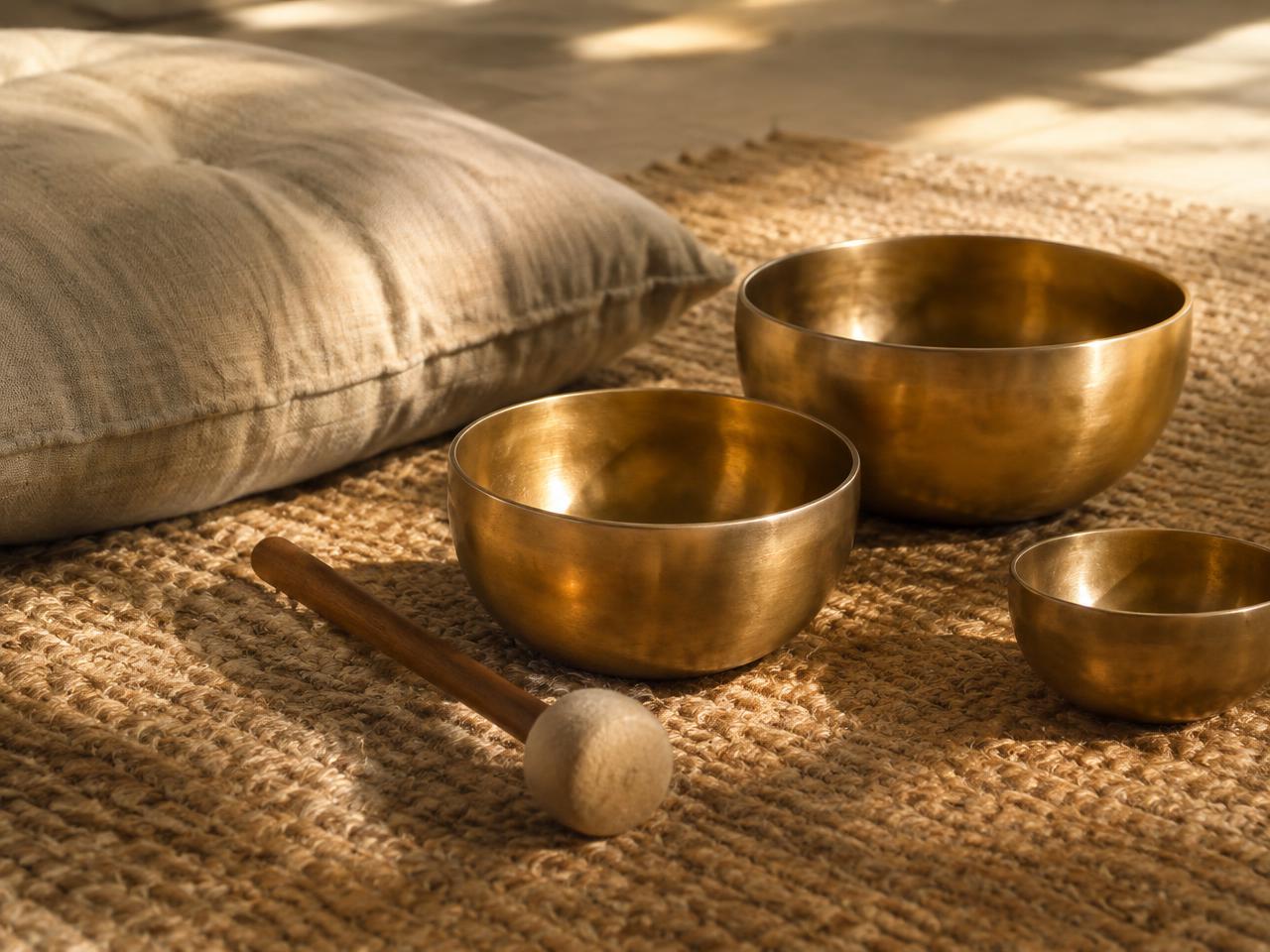
In a sound bath, you lie down, often with a mat and blanket, while a facilitator plays instruments such as singing bowls, gongs and chimes. Your only job is to rest and listen.
Chanting and mantra use repeated sounds or words, often with roots in spiritual traditions. Om is one of the best known. Humming is chanting’s quieter cousin, and you can do it anywhere.
Drumming circles and group singing bring people together to make sound in time with each other. No experience required.
A newer addition is vibroacoustic therapy, where low sound is played through a mat, chair or cushion, so you feel it as vibration as well as hearing it.
These practices are different from music therapy, which is a clinical therapy delivered by a registered music therapist.
What may it help with?
02People often turn to sound when their mind is too busy to sit in silence, when they feel flat or disconnected, or when stress has been humming along in the background for a long time.
Sound asks very little of you. You don’t have to talk, perform or get anything right. For many people, that’s exactly what makes it a way in.
How does it work?
03Sound seems to reach us in a few different ways.
Through the breath
Humming, chanting and singing all naturally lengthen your out-breath. A slow, long exhale is one of the best-known ways to help your body shift into a calmer state.
Through rest
A sound bath gives you permission to lie down and do nothing for an hour. For a busy mind, the sound becomes something to hold onto, which can make stillness feel easier.
Through each other
Drumming or singing with others means breathing and moving in time together. That shared rhythm can build a sense of belonging that’s hard to find anywhere else.
Some people also find their body wants to respond: to sway, rock, sigh or let out a sound of its own. That’s welcome too.
“Your body knows what it needs to let go of.”
Founder, The Mental Wealth Hub
What does the evidence say?
04Sound practices are still young in research terms, but the early findings are encouraging, especially when people make sound together.
For singing bowls and sound baths, a 2025 review of 14 studies found most reported less anxiety and low mood, a greater sense of wellbeing and calmer heart rates [1].
Group drumming has one of the most striking studies. Over 10 weeks, people using mental health services who joined a drumming group felt less depressed and anxious and more socially connected, and the gains lasted at least three months. Their saliva even showed a shift towards a less inflammatory immune profile [2].
Group singing has good support too. A 2018 review of 13 studies of adults living with a mental health condition found meaningful improvements in wellbeing [3].
There’s something special about singing together. When researchers followed a London community choir, people could tolerate more pain after a rehearsal, a sign scientists link to the release of endorphins, the body’s own natural painkillers. Singers also felt closer to each other, and this held even when several groups came together as one choir of more than 200 voices [4]. Another choir study found that oxytocin, often called the bonding hormone, was higher after people sang together than after they simply talked together [5].
Researchers are still untangling how much comes from the sound itself and how much from the rest, the breathing and the company. If you’re lying under a blanket feeling calmer than you have all week, that may not matter much.
What does a session or practice look like?
05Try this: three rounds of om
- Sit comfortably and take a slow breath in through your nose.
- As you breathe out, let the sound “ahh” open your mouth, then move to “ooo” and close into a long “mmm”.
- Let the “mmm” hum until your breath runs out. Notice the vibration in your chest, throat and face.
- Pause for a natural breath, then begin again.
- After three rounds, sit quietly for a moment and notice how you feel.
If om doesn’t sit right with you, simply hum a single note. Or put on a song you love and sing along, badly if you like.
Finding a sound bath, choir or drumming circle
Search for “sound bath”, “sound healing”, “community choir” or “drumming circle” plus your suburb. Many community choirs welcome anyone, no audition needed, and drumming circles are often free or low cost.
Gongs can be loud. If the volume feels like too much, let the facilitator know, choose a spot further away or bring earplugs. And if deep rest stirs up feelings, it’s fine to sit up, open your eyes or step outside for a moment.
You’ve read about it. Now what can you actually do?
You don’t need to have the perfect plan. Choose the next step that feels most useful for where you are right now.
Always speak with a qualified health professional before starting something new. If you are struggling right now, find immediate support.
Want to keep exploring?
Recommended articles, books, podcasts and lived experiences related to this topic.
Explore the LibraryRelated Tools
This is educational information. It is not a recommendation that this approach is right for you. Always speak with a qualified health professional.
