
Acupuncture
If the thought of needles makes you wince, you’re not alone. Here’s the good news: acupuncture needles are nothing like the ones used for injections or blood tests. They’re not much thicker than a strand of hair, and many people barely feel them go in.
Some people even fall asleep on the table.
What is it?
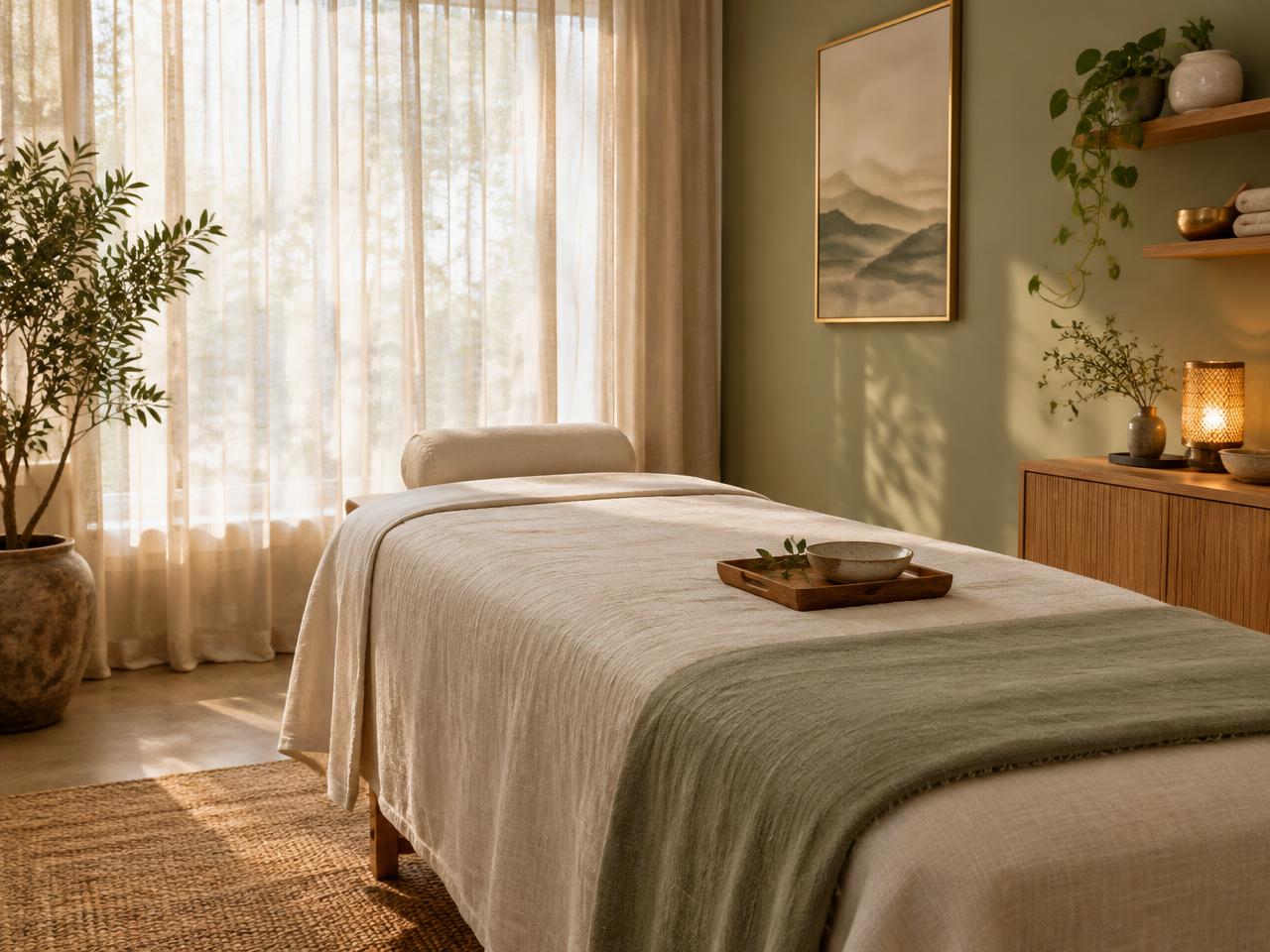
01Acupuncture is part of traditional Chinese medicine, which has been practised for more than two thousand years. A practitioner gently places very fine, sterile, single-use needles at specific points on your body, then leaves them in place while you rest.
In traditional Chinese medicine, these points sit along pathways called meridians, which carry the body’s vital energy, or qi (pronounced “chee”). When that flow is out of balance, health and wellbeing can suffer. Acupuncture aims to bring it back into balance.
In Australia, acupuncture is one of the few traditional practices with national registration. Acupuncturists and Chinese medicine practitioners are registered with AHPRA, the same body that registers doctors, nurses and psychologists. Some doctors and physiotherapists also use needling, often called dry needling or medical acupuncture.
What may it help with?
02Some people come to acupuncture because stress has settled into their shoulders, their jaw or their gut. Others are looking for support with pain, muscle tension, digestive discomfort, low energy or poor sleep. For some, it’s a quiet hour where very little is asked of them.
How does it work?
03Think of it as two maps describing the same territory.
The traditional map sees your body as a network of energy pathways. Placing needles at particular points helps qi flow freely again, restoring balance between body, mind and emotions.
The modern map looks at the nervous system. Researchers are exploring how needling may influence the way the body processes stress and pain signals, and how it may help the body shift into a calmer, more settled state.
Neither map is complete yet. And part of what helps may be the experience itself: lying still, being listened to and cared for, with nowhere else to be.
What does the evidence say?
04For a practice this old, acupuncture has a surprisingly large body of modern research, and some of the most interesting findings are recent.
For anxiety, a 2025 review of 20 trials found acupuncture eased anxiety more than both sham (fake) needling and usual care in the short term. Compared with sham needling, the benefit was still there at follow-up [1].
For trauma, a 2024 trial with combat veterans living with PTSD found real acupuncture helped more than a convincing fake version. Researchers also saw changes in the body’s startle response, a sign that something was shifting in the nervous system [2].
For depression, an Australian-led review of 29 studies found acupuncture improved symptoms, especially when used alongside other treatment [3]. In a large trial across UK general practices, acupuncture helped about as much as counselling, with some benefit still there a year later [4].
The quality of studies varies, and many are small, so researchers are still working out exactly how acupuncture helps and who it helps most. But the picture so far is encouraging.
What does a session or practice look like?
05Your first appointment usually starts with a conversation about your health, sleep, digestion, energy and how you’ve been feeling. Your practitioner may also look at your tongue and feel your pulse, both part of traditional diagnosis.
Then you’ll lie down comfortably while the needles are placed. Most people feel a light prick or nothing at all, sometimes followed by a dull ache, warmth or tingling. The needles usually stay in for 20 to 30 minutes while you rest. Many people leave feeling heavy, relaxed and a little sleepy. Others leave feeling energised. It often depends on what you’ve come in for.
A course of sessions is common, often weekly to begin with. Many private health extras policies include acupuncture with a registered practitioner, so it’s worth checking yours.
Risks and considerations
06Check they’re registered. You can look up any acupuncturist or Chinese medicine practitioner on the public AHPRA register in a minute or two.
Share your health picture. Let your practitioner know if you take blood-thinning medication, have a bleeding disorder, have a pacemaker or are pregnant, so they can adjust their approach.
Expect a little tenderness. Small bruises, soreness at a needle site or feeling tired afterwards are common and usually pass quickly.
Ask about herbs. Chinese herbal medicines are sometimes offered alongside acupuncture. Herbs can interact with medications, so check with your doctor or pharmacist before you start them.
Questions to ask a practitioner
07- Are you registered with AHPRA through the Chinese Medicine Board of Australia?
- Do you practise traditional Chinese acupuncture, dry needling or both?
- Do you use single-use, sterile needles?
Founder’s Insight
“I’ve been having acupuncture for about 25 years, and I still walk out feeling better than I did walking in.”
I first tried acupuncture in my early twenties, when I was running a business and going a hundred miles an hour. I’ve kept coming back ever since. I aim for once a month, and when life gets tough, I’ll go weekly or fortnightly.
Some days I can feel exactly where I’ve been holding tension. Other times I only notice how much I was bracing once it starts to ease. I’ve found it helpful for my gut, my sleep and my focus. Some sessions leave me ready for bed. Other times I walk out feeling like I could take on the world.
I still go for traditional Chinese acupuncture, and I also see a chiropractor who combines acupuncture with kinesiology, Neuro Emotional Technique (NET) and chiropractic care. I tend to leave those sessions feeling more settled in my body and clearer in my head. That’s what keeps me coming back. When life asks a lot of me, I feel like I’ve got a bit more room to handle it.
Founder, The Mental Wealth Hub
You’ve read about it. Now what can you actually do?
You don’t need to have the perfect plan. Choose the next step that feels most useful for where you are right now.
Always speak with a qualified health professional before starting something new. If you are struggling right now, find immediate support.
Want to keep exploring?
Recommended articles, books, podcasts and lived experiences related to this topic.
Explore the LibraryRelated Tools
This is educational information. It is not a recommendation that this approach is right for you. Always speak with a qualified health professional.
