
Somatic Movement
You don’t always need a harder workout. Sometimes what your body needs is a slower one.
Somatic movement invites you to move a little, notice a lot, and let your body find an easier way.
What is it?
01Have you ever noticed your shoulders up around your ears and had no idea how long they’d been there?
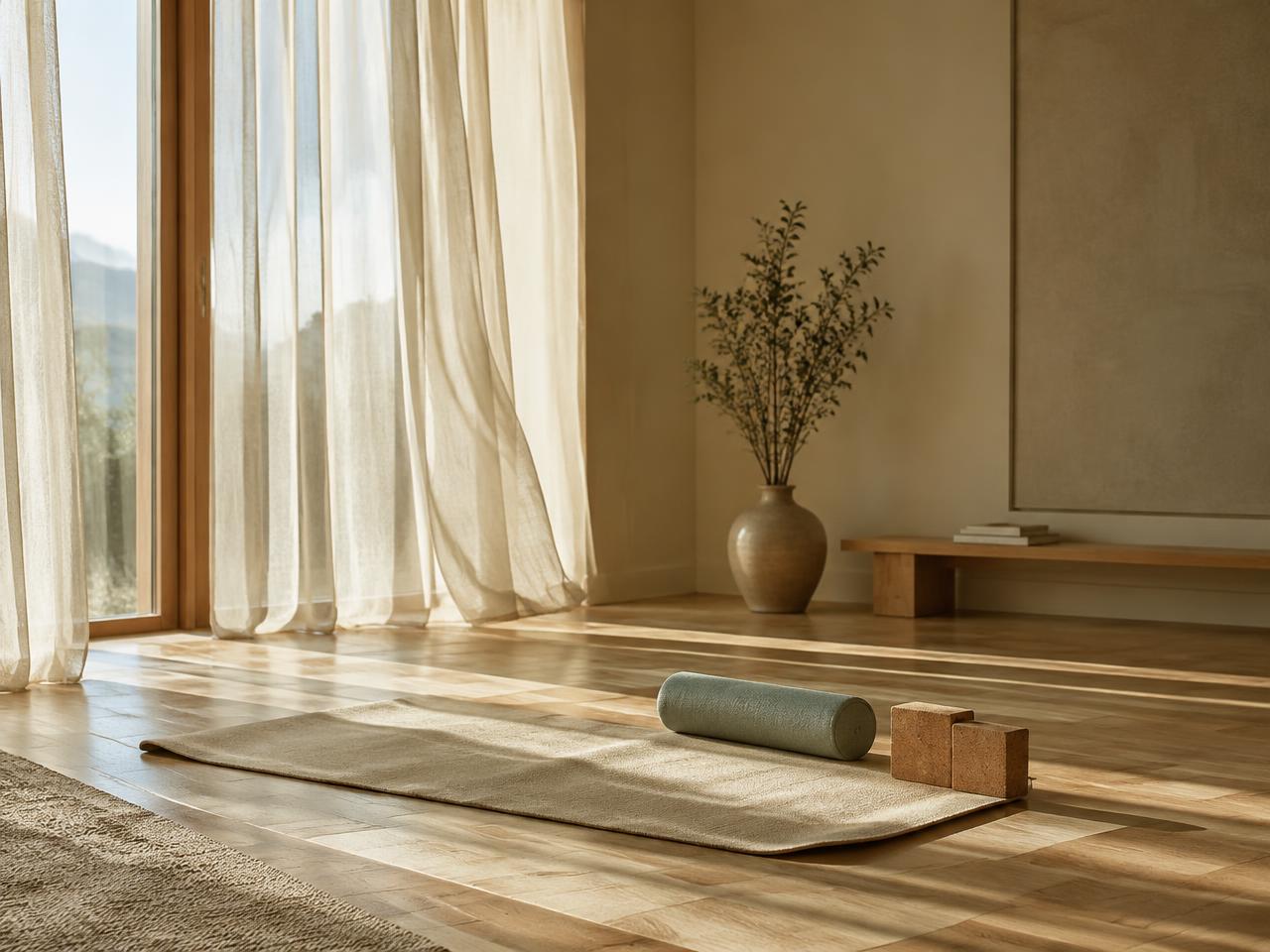
Somatic movement is slow, gentle movement guided by attention. You move a small amount, often lying down or sitting, and pay attention to how the movement feels from the inside rather than how it looks from the outside. There’s no performance and no correct shape to reach.
“Somatic” simply means “of the body”.
It includes established methods such as the Feldenkrais Method, the Alexander Technique, Body-Mind Centering and Hanna Somatics, as well as gentler floor-based practices taught in studios and online.
If you’re drawn to something more expressive, with music and the freedom to move however you feel, see Somatic Dance Movement. This page is the slower, quieter end of the same family. For somatic principles used in therapy, see Somatic Experiencing and Somatic Therapy.
What may it help with?
02People often come to somatic movement carrying tension they can’t seem to shift, ongoing aches, or a sense of living from the neck up.
Why am I always so tight? Why can’t I relax, even when I stretch? Why do I feel so far away from my body?
It’s commonly explored for chronic stress, body tension, feeling disconnected from your body and persistent pain. It can also suit people who find faster exercise too much right now, whether because of pain, exhaustion or simply where life is at.
How does it work?
03Much of how we move is habit. We hold our jaw, shoulders or hips in ways we no longer notice, often shaped by stress, injury or years at a desk. Somatic movement slows things down enough for those patterns to come into view.
Feldenkrais works through learning rather than treating a condition. You’re not being corrected or stretched into place. You’re giving your nervous system new options, and letting it choose the easier one.
The attention is the practice. Noticing small sensations, such as the weight of your head or the way your ribs move as you breathe, builds interoception: your sense of what’s happening inside your body. It’s a thread that runs through much of The Body + Somatics.
And sometimes, slowing down lets the body do what it needs. A sigh. A yawn. A softening you didn’t know you were waiting for.
“If you know what you are doing, you can do what you want.”
Moshe Feldenkrais
What does the evidence say?
04Somatic movement is taught by physiotherapists, movement teachers and practitioners around the world. Most of the research so far looks at physical outcomes, and research on mental health is still emerging.
A 2022 review of 16 trials found Feldenkrais improved walking, balance, mobility and quality of life in older people. In three trials with people living with chronic low back pain, it improved pain, disability, quality of life and body awareness [1].
A 2025 review of 10 studies of dance and somatic movement practices in everyday, non-clinical settings reported improvements in body awareness, emotional regulation and stress. It’s a promising direction [2].
Together, the research suggests that gentle, attention-led movement can ease tension and pain, and help people feel more aware of, and more at home in, their bodies.
What does a class look like?
05A class is usually quiet and slow. You might spend much of it lying on a mat or sitting in a chair, guided through small movements with plenty of pauses. A teacher may invite you to notice the difference between one side and the other, or between before and after.
Feldenkrais is taught in two ways: group classes, called Awareness Through Movement, and one-on-one sessions with gentle hands-on guidance, called Functional Integration.
You can also practise at home with a recording. Ten quiet minutes on the floor is a lovely place to start.
It can feel strange at first, especially if you’re used to exercise that pushes. Here, less really is more.
Finding the right teacher
Training matters. So does how you feel in the room. A good teacher will encourage you to rest whenever you need and never push you past what feels comfortable.
Something to try
Lie on your back with your knees bent and your feet on the floor, or sit comfortably. Very slowly, roll your head a little to the right, only as far as feels easy, then back to the middle. Make the movement smaller than you think it needs to be.
Do this a few times, noticing what else moves: your eyes, your jaw, your shoulders. Rest. Then try the left side. Rest again, and notice whether anything feels different.
Considerations
06Training varies. Feldenkrais and Alexander Technique teachers complete lengthy trainings and belong to professional associations. “Somatic movement” as a general term isn’t protected, so ask what a teacher has trained in.
Some sessions involve touch. One-on-one Feldenkrais and Alexander lessons use gentle hands-on guidance. If you’d rather not be touched, say so, or start with a group class.
Questions to ask a teacher
07- Which method have you trained in, how long was your training, and which professional association do you belong to?
- Do you offer one-on-one sessions, and do they involve hands-on guidance?
- What can I practise at home between classes?
You’ve read about it. Now what can you actually do?
You don’t need to have the perfect plan. Choose the next step that feels most useful for where you are right now.
Always speak with a qualified health professional before starting something new. If you are struggling right now, find immediate support.
Want to keep exploring?
Recommended articles, books, podcasts and lived experiences related to this topic.
Explore the LibraryRelated Tools
This is educational information. It is not a recommendation that this approach is right for you. Always speak with a qualified health professional.
