
Ecstatic Dance
Think about a big Saturday night. Loud music, a crowded room, and a lot of energy spent wondering who’s watching, what to say and whether you’re dancing right.
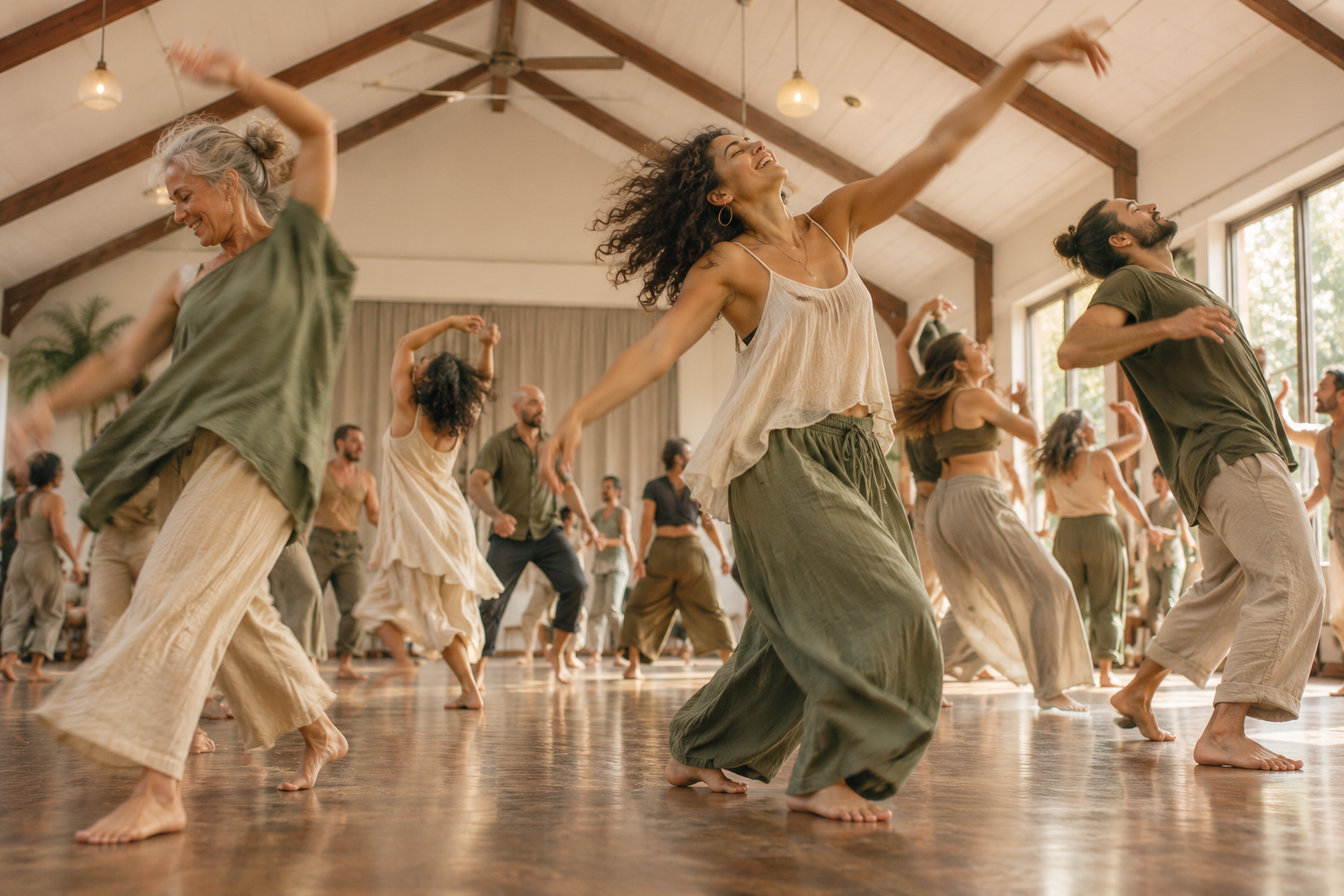
Now imagine Sunday morning. The same music, the same room full of people, but no alcohol, no phones and no conversation. Just everyone dancing exactly how they feel.
That’s Ecstatic Dance.
What is it?
01Ecstatic Dance is free-form dancing in a group, usually to a DJ set that starts slowly, builds to a peak and then softens. There’s no choreography and nothing to get right.
What makes it different is a few shared agreements:
- Substance-free. No alcohol and no other substances.
- No talking on the dance floor. You can connect through movement, or not at all.
- No phones. No photos, no filming, no checking messages.
- No shoes. Bare feet or socks, for a softer, more grounded feel.
Together, these agreements make the room feel safe enough to stop performing and simply move. Many events open with a welcome or a short warm-up, and some finish with a sharing circle over tea.
What may it help with?
02People come for release and for joy. They also come for something harder to find: the feeling of being among people without having to make conversation.
For anyone who loves music and dancing but not the drinking culture that usually comes with it, Ecstatic Dance can feel like coming home. It’s also popular with people in recovery, people who don’t drink, and anyone who has quietly missed dancing for years.
It’s commonly explored for chronic stress, low mood and feeling disconnected from yourself or others.
How does it work?
03Moving in time with other people is one of the oldest ways humans have connected. Long before we had words for it, we danced together around fires, at celebrations and in ceremony.
On an Ecstatic Dance floor, you’re doing the same thing. Everyone is moving in their own way, yet you’re all breathing, sweating and riding the same music together. Many people describe a deep sense of belonging, even with strangers they’ve never spoken to.
The agreements take away the usual distractions. With nothing to drink, no one to impress and no screen to hide behind, you’re free to feel whatever is there: wild joy, a few tears, a lot of laughter, or simply relief.
And the shape of the music matters too. The slow start lets you arrive, the peak lets your energy go, and the gentle finish brings you back down, so you leave settled rather than wired.
“Dance, dance, otherwise we are lost.”
Pina Bausch
What does the evidence say?
04Ecstatic Dance hasn’t been studied much on its own, but the people who practise it tell a consistent story.
A 2021 survey of more than 1,000 conscious dancers, including people who go to Ecstatic Dance, found that those who danced more often, and for longer, reported greater mindfulness and life satisfaction. Nearly everyone said they felt more present in their body, and almost all of those living with depression or anxiety said dancing helped them cope [1].
For the wider research on dance and mental health, see our Somatic Dance Movement page.
What does an event look like?
05You arrive, leave your shoes and phone at the door, and find a spot on the floor. The music usually builds over an hour or so, then comes back down. Most events run for about two hours, and many are held on weekend mornings.
You can dance with your eyes closed the whole time, stay in one corner, or lie on the floor. Nobody is watching you the way you might expect. Everyone is busy with their own dance.
Many people leave feeling lighter, more open and strangely close to a room full of people they’ve barely spoken to.
Something to try: your first Ecstatic Dance
- Arrive a little early, so you can settle in before the room fills up.
- Start at the edges. There’s no rule that says you have to be in the middle.
- Close your eyes if it helps you stop wondering who’s looking.
- Give it time. The first 20 minutes can feel awkward. Most people find that fades as the music builds.
- Stay for the end. The slow finish is often the best part.
Considerations
06Look for substance-free. A true Ecstatic Dance is alcohol and substance-free. If an event serves drinks or treats substances as part of the experience, it isn’t following the usual agreements. For anyone in recovery, that agreement is what makes the space feel safe.
It can get loud and busy. If you’re sensitive to noise or crowds, ask about the size of the event, and know you can step out whenever you need to.
Questions to ask a facilitator
07- Is the event fully substance-free, and how is that upheld?
- How many people usually come, and how loud does it get?
- Is there a sharing circle or a chance to connect afterwards?
You’ve read about it. Now what can you actually do?
You don’t need to have the perfect plan. Choose the next step that feels most useful for where you are right now.
Always speak with a qualified health professional before starting something new. If you are struggling right now, find immediate support.
Want to keep exploring?
Recommended articles, books, podcasts and lived experiences related to this topic.
Explore the LibraryRelated Tools
This is educational information. It is not a recommendation that this approach is right for you. Always speak with a qualified health professional.
