
5Rhythms
In the late 1970s, at a retreat centre on the California coast, a dancer named Gabrielle Roth noticed something. When people moved freely to music, their movement tended to pass through the same five patterns, again and again.
She called them the five rhythms. Today, people around the world move through them every week, in community halls, studios and on beaches, including here in Australia.
What is it?
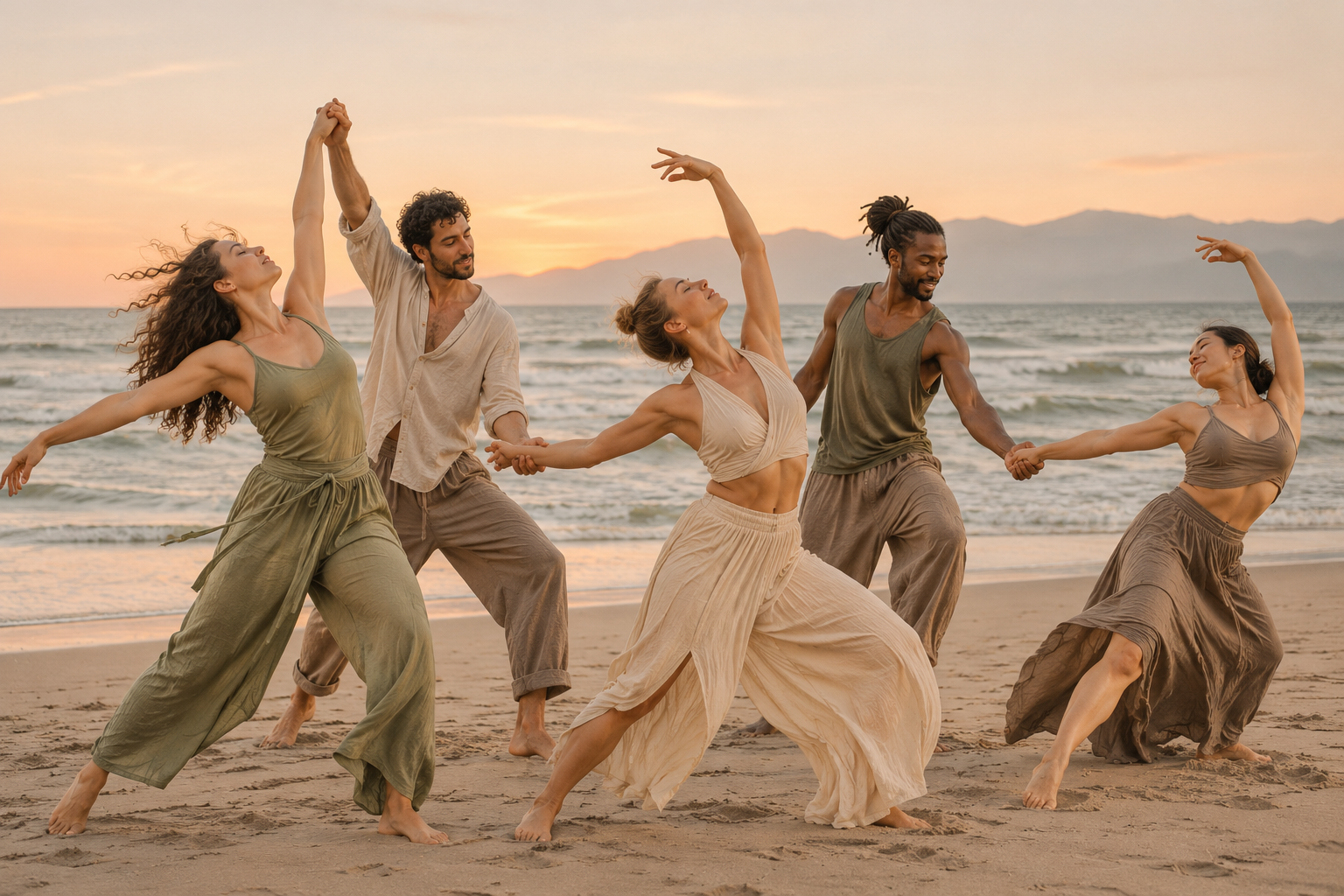
015Rhythms is a free-moving dance practice. A trained teacher plays music that carries the room through five rhythms, always in the same order: flowing, staccato, chaos, lyrical and stillness. One full journey through all five is called a Wave.
There are no steps to learn and no one to copy. You move however the rhythm moves you. Some people travel the whole room. Others barely leave their spot. Both are 5Rhythms.
Roth described the practice as a moving meditation, and many people experience it that way: a way to get out of their head and back into their body.
What may it help with?
02People often come to 5Rhythms when they feel stuck, wound tight, or out of touch with their own energy. Some come to move through a big life change. Others simply want a weekly place to shake off the week.
It’s commonly explored for chronic stress, feeling stuck, feeling disconnected from your body and emotions that are hard to express. Over time, many dancers say it shows them something about how they move through life, not just the dance floor.
How does it work?
03Think of the Wave as a map. Each rhythm has its own quality, and its own lesson.
- Flowing is soft and continuous, like water. It helps you arrive, feel the ground and stop thinking so hard.
- Staccato is sharp and defined, full of edges and beats. It’s where energy finds its shape and you find your voice.
- Chaos is loose and wild. Your head drops, your body lets go, and control takes a back seat.
- Lyrical is light and playful. After the release of chaos, there’s often a lift, a sense of freedom.
- Stillness is where it all lands. The music slows, the body quietens, and you notice what has changed.
Most people find one rhythm feels like home and another feels like a stretch. Someone who always keeps it together might find chaos frightening at first, then strangely freeing. Someone who lives in their head might find flowing surprisingly hard to drop into.
That noticing is the practice. And many people find it travels with them off the dance floor.
“Put the body in motion and the psyche will heal itself.”
Gabrielle Roth
What does the evidence say?
045Rhythms has only been studied a little on its own, and what has been found is moving.
In a 2023 Danish study, 29 people living with or after cancer took part in a weekly 5Rhythms class for two months and kept diaries. They described sensing their whole body again, something liberating happening inside them, and the support of moving with others on the same path. As one theme put it: “We travel together” [1].
5Rhythms is a form of dance, and the wider research on dance and mental health is encouraging. You’ll find it on our Somatic Dance Movement page.
What does a class look like?
05A Wave usually runs for around two hours. You leave your shoes and phone at the edge of the room, and there’s generally no talking on the dance floor. The teacher chooses the music and offers occasional guidance, but mostly the rhythm leads.
You can rest, sit out or move in the smallest possible way and still be fully part of it.
Many people leave feeling emptied out in the best way: calmer, clearer and more at home in their body. Weekly classes are the usual starting point. Weekend and longer workshops go deeper, and many people try those once they know the practice.
Something to try
You don’t need music for this one. Read through the five rhythms again, and ask yourself:
- Which rhythm do I spend most of my life in?
- Which one do I avoid?
- Which one might I need a little more of right now?
Maybe you live in staccato, all edges and to-do lists, and haven’t let yourself flow for months. Maybe you’ve been stuck in stillness for so long it’s turned into stagnation. Notice, without judging. That’s where 5Rhythms begins.
Considerations
06Chaos is part of the ride. The middle of a Wave can feel intense. A good teacher will remind you that you can always slow down, and the music always comes back to stillness.
Begin with a weekly class. It’s the gentlest way to get to know the rhythms before trying a longer workshop.
Questions to ask a teacher
07- Are you an accredited 5Rhythms teacher?
- How do you guide first-timers through the chaos rhythm?
- Is this class suitable for beginners, or more for experienced dancers?
You’ve read about it. Now what can you actually do?
You don’t need to have the perfect plan. Choose the next step that feels most useful for where you are right now.
Always speak with a qualified health professional before starting something new. If you are struggling right now, find immediate support.
Want to keep exploring?
Recommended articles, books, podcasts and lived experiences related to this topic.
Explore the LibraryRelated Tools
This is educational information. It is not a recommendation that this approach is right for you. Always speak with a qualified health professional.
