
Rituals & Ceremony
Honour the endings. Make space for new beginnings.
Some moments deserve more than simply carrying on. A loss. A fresh start. Letting go of something you’ve outgrown, or welcoming what comes next. Ceremony and ritual give us a way to pause, acknowledge what matters and move forward with intention.
They can be shared, deeply spiritual or entirely your own. A candle. A letter. A monthly moment to check in with yourself. You don’t need an elaborate ceremony to give something meaning.
What is it?
01Something significant happens. Someone dies. A relationship ends. You leave the home you raised your children in. Or, after a difficult chapter, you finally feel ready to begin again.
And somehow, life expects you to still take out the bins and work out what’s for dinner.
Ceremony gives these moments some space. A way to say: this mattered. This changed me. I want to honour it.
Ceremonies often mark significant occasions through meaningful actions, sometimes shared with others. Funerals, weddings, coming-of-age celebrations and seasonal gatherings are familiar examples. Rituals can be smaller practices we return to, bringing intention into everyday life.
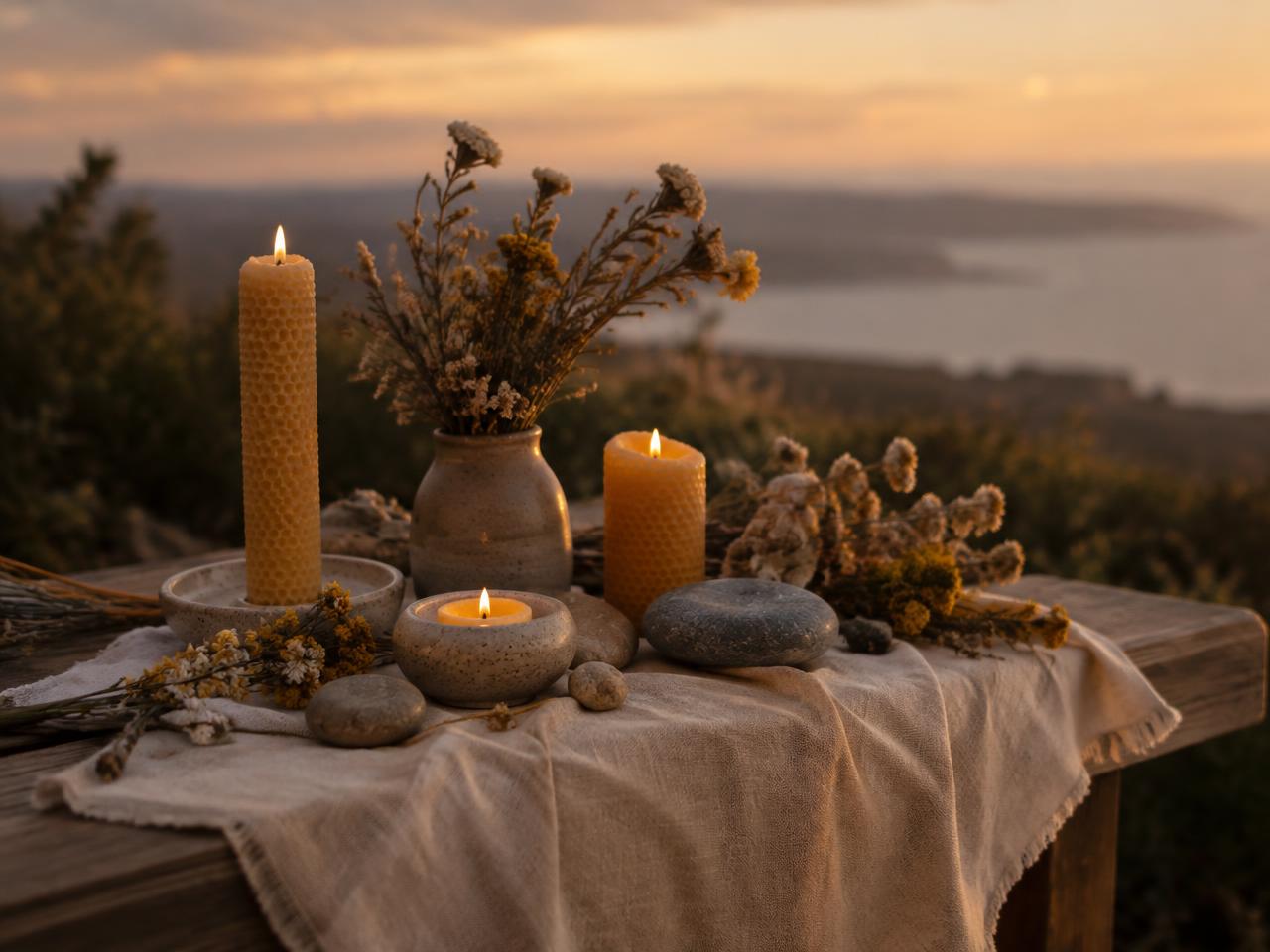
Lighting a candle for someone you miss. Saying a prayer. Writing down what you’re ready to leave behind. Taking a quiet moment each morning to remember what matters to you.
You can also introduce a monthly ritual. Some people choose the new moon to set intentions and the full moon to reflect or symbolically let go. Others choose the first Sunday of the month. The timing can hold spiritual meaning or simply help you make space in the diary.
What makes it a ritual is the meaning you bring to it.
What may it help with?
02Have you ever felt as though something enormous has happened in your life, but there’s been no real moment to acknowledge it?
Ritual offers a way to mark both the experiences we celebrate and the ones we barely know how to talk about.
People may turn to ceremony for:
- Grief and remembrance: honouring someone, keeping a connection or marking an anniversary.
- Endings and closure: acknowledging a relationship, a chapter or an identity you’re leaving behind.
- New beginnings: welcoming a new home, relationship, role or direction.
- Recovery milestones: recognising the work it has taken to get here.
- Reflection and intention: regularly checking in with what you need and how you want to live.
- Connection: sharing something meaningful with family, friends, community or your spiritual practice.
An ending doesn’t have to look significant to anyone else to deserve acknowledgement. Neither does a beginning.
And closure doesn’t have to mean you’re suddenly fine with what happened. You might simply be ready to recognise it and choose your next step.
How does it work?
03Ritual brings intention into something you actually do. You write the words, light the candle, gather the people or take the walk.
Researchers have proposed three main ways rituals may support us: helping us manage emotion, gather our focus and strengthen social connection.
Giving feelings somewhere to go
Sometimes we don’t have the words for what we’re carrying. A symbolic action can offer a way to express it without needing to explain everything.
Creating a moment to pause
A familiar sequence can give your attention somewhere to settle. It creates a little structure when life feels uncertain or overwhelming.
Making room for connection
A shared ceremony allows other people to witness what matters to you. You can remember together, celebrate together or acknowledge a difficult change without carrying the whole moment alone.
These are possible explanations, rather than a promise of how every ritual will feel. The meaning, the setting and your relationship with the practice all matter.
What does the evidence say?
04Ritual has a long history across cultures. Research into its psychological effects is growing, although studying something so personal and culturally varied comes with challenges.
Emotion, focus and connection
A review published in 2018 brought together research across psychology, neuroscience, anthropology and other fields. It proposed that rituals can serve three broad functions: regulating emotion, supporting focus and performance, and strengthening social connection. [1] This is a framework for understanding ritual, rather than proof that every ceremony improves mental health.
Funerals and grief
A 2022 survey of 232 bereaved people found that funeral attendance and more positive evaluations of the funeral were associated with fewer prolonged grief symptoms. [2] Around half of participants also used alternative rituals they found helpful.
Those personal grief rituals were not associated with fewer prolonged grief symptoms in this study. That distinction matters: finding something comforting or meaningful doesn’t necessarily mean it changes a clinical symptom score. The survey also cannot establish cause and effect.
Culture belongs in the conversation
A 2024 review examined 42 studies of culturally grounded programs involving Indigenous peoples in Australia, Canada, New Zealand and the United States. [3] It identified pathways to healing including safety, cultural connection, empowerment, emotional expression, and social and spiritual support.
These were broader programs, so their findings cannot be attributed to ceremony alone. The review also challenged the limited progress of Western approaches in addressing Aboriginal mental health inequities and called for measures that reflect Indigenous understandings of wellbeing.
What deserves more exploration
There’s more to understand about which practices help, for whom and in what circumstances. Research also needs to make room for outcomes such as belonging, meaning and cultural connection, alongside symptom measures.
We can ask thoughtful questions about the evidence while respecting the knowledge and lived experience held within communities.
What does a practice look like?
05There’s no single format. It might be a gathering led by an elder or celebrant. A memorial. A circle with people you trust. Or ten quiet minutes at home.
If you're invited into a ceremony from a culture that isn't your own, including Aboriginal and Torres Strait Islander ceremonies, follow the guidance of the people whose ceremony it is.
A monthly check-in
Choose a regular time to pause. Put your phone away, maybe light a candle and give yourself a little space.
You might ask:
- What has this month brought up for me?
- What am I grateful for?
- What am I ready to let go of?
- What do I want to make room for?
- What is one action I can take to support that intention?
Write your answers, speak them aloud or simply sit with them.
New moon and full moon rituals
If lunar rituals resonate with you, you might use the new moon to consider what you want to nurture and the full moon to reflect on what you’re ready to release.
Treat this as a symbolic or spiritual practice. You can use the rhythm as a reminder to check in, without needing to believe the moon determines how you feel.
Marking an ending
Write a letter you don’t send. Acknowledge what happened, what you’ll miss, what you’ve learned or what you no longer want to carry. You can keep it, tear it up or read it with someone you trust. There’s no obligation to forgive, feel grateful or find a lesson before you’re ready.
Welcoming a beginning
Set an intention for a new chapter. Invite someone to witness it. Choose a meaningful object, plant something or take a walk somewhere that feels like a fresh start.
Then give that intention a practical next step. What will you do differently tomorrow?
Remembering someone
Cook their favourite meal. Play their music. Tell their stories. Light a candle on their birthday or visit somewhere you shared.
You’re allowed to create ways to keep loving someone who is no longer here.
Some rituals bring tears or laughter. Others feel quiet or a little awkward. You don’t need a dramatic emotional release for the moment to matter.
You’ve read about it. Now what can you actually do?
You don’t need to have the perfect plan. Choose the next step that feels most useful for where you are right now.
Always speak with a qualified health professional before starting something new. If you are struggling right now, find immediate support.
Want to keep exploring?
Recommended articles, books, podcasts and lived experiences related to this topic.
Explore the LibraryRelated Tools
This is educational information. It is not a recommendation that this approach is right for you. Always speak with a qualified health professional.
