
Integration work
The psychedelic experience is only part of the journey. Integration is where insight becomes change. It is an essential part of the therapeutic process, not an optional afterthought: making sense of what surfaced, getting the support you need and putting what you learnt into everyday practice.
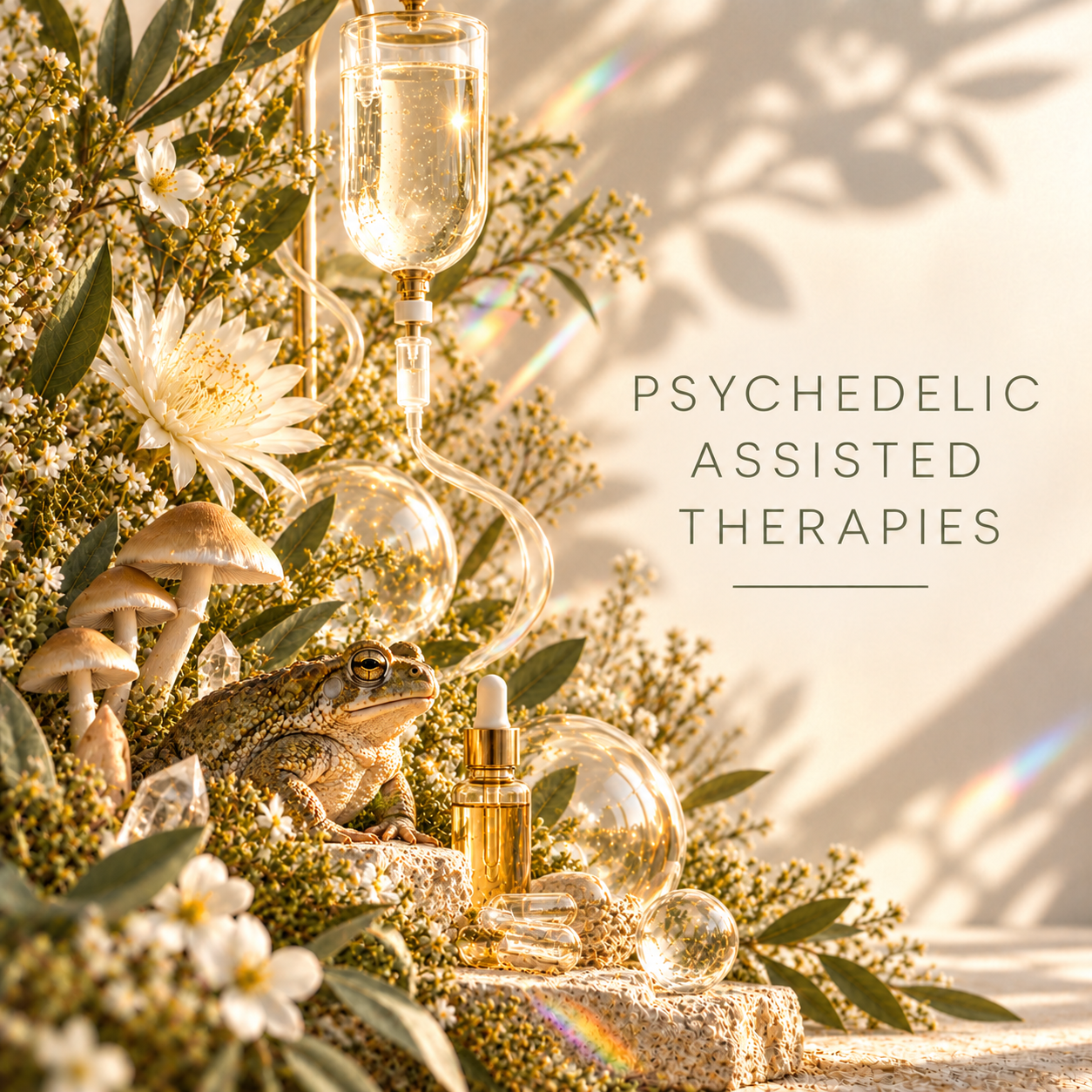
Integration is key
01The psychedelic experience is only part of the journey. Integration is where insight becomes change.
A medicine journey can give you a completely different perspective on your life. It may shine a light on patterns, behaviours, relationships, environments, old memories or emotions that have been sitting underneath the surface for years. But seeing something clearly is not the same as changing it.
That is what integration is for.
Research describes psychedelic integration as the process of making sense of what came up, working through it, and bringing the insights back into everyday life. The field is still developing, and there is no single agreed model that works for everyone, but there is broad recognition that post-experience support matters and should be essential.
What integration can actually look like
02Integration does not have to be complicated. Often, the first thing people need is simply space.
Space to sleep. Space to journal. Space to walk in nature. Space to sit quietly with what happened without immediately going back into work, parenting, noise, social media and everyday life.
Creating two or three quieter days afterwards can be incredibly valuable where possible. If you can place yourself somewhere nurturing, with good food, rest, nature and less responsibility, even better. It gives your nervous system and your mind time to process before the outside world rushes back in.
The experience may be over, but the processing often is not.
Get into your body
03Integration doesn't only happen through talking.
Psychedelic experiences can bring emotion and memory into the body very strongly, which is why somatic and body-based work can be so helpful afterwards.
That might include:
- somatic therapy
- gentle shaking or TRE-style movement
- walking in nature
- stretching or intuitive movement
- 5Rhythms or other free-form dance
- breathwork
- massage or bodywork
- grounding practices
- restorative yoga
- sauna or other gentle restorative practices, if they feel supportive for you
The goal is not to force another release. It is to give the body space to process what has already been opened. Somatic awareness is increasingly included within psychedelic integration models because integration can involve the mind, body, emotions, behaviour, relationships and sense of meaning, not just intellectual understanding.
Talk it through
04A good therapist can help you unpack what came up without over-interpreting it for you.
This becomes especially important if a journey brings up trauma, grief, fear, childhood memories, relationship issues or a sudden realisation that something in your life needs to change.
For some people that support may come from a psychologist or psychotherapist. For others it may include a trauma-informed integration therapist, somatic therapist or appropriately trained integration practitioner.
What matters most is that you have someone who can help you make meaning of the experience and turn insight into practical change.
Recent practitioner research also highlights trauma-informed psychotherapy, grounding, mindfulness, meaning-making, peer support and community as common forms of support when people are working through difficult or emotionally intense psychedelic experiences.
Then comes the real work
05This is the part that is often overlooked.
A journey might show you that you need to change a relationship, leave an environment, set a boundary, stop a behaviour, address an addiction, repair something with your family, take better care of your body or change the way you speak to yourself.
Integration is where you begin doing those things.
Sometimes that means therapy. Sometimes it means changing your routine, your environment or the people around you. Sometimes it means building entirely new patterns.
Tools such as neurofeedback, psychotherapy, somatic work, meditation, movement, nervous-system regulation and other forms of behavioural support can all become part of that longer process.
The point is not to endlessly analyse the psychedelic experience.
The point is to live differently because of what you learnt.
Integration is personal
06There is no perfect integration checklist.
One person may need silence and nature. Another may need therapy several times a week. Someone else may need community, movement, creative work or a structured behavioural plan.
The best integration is usually the one that responds to what actually came up for you.
If the journey highlighted your body, work with the body. If it highlighted trauma, find trauma-informed support. If it highlighted addiction, build stronger structure and accountability around that.
If it highlighted your environment, change the environment. If it showed you a pattern, start practising a new one. That is integration.
Build your support before the journey
07Ideally, integration should not begin after the medicine session. It should be thought about during preparation.
Know who you are going to speak to afterwards. Have your therapist booked. Clear some space in your calendar. Think about where you will stay, what you will eat, who you want around you and what practices help you feel grounded.
Research on integration consistently suggests that planning for support beforehand can make the process more intentional and can help people work with both positive and difficult experiences afterwards.
More than a couple of coaching calls
08One of the gaps we see in emerging psychedelic treatment is that the medicine session can receive enormous attention while integration is reduced to one or two follow-up conversations.
For some people that may be enough. For others, particularly when trauma or major life material has surfaced, it may only be the beginning.
Meaningful integration can continue for weeks or months because actual behavioural change takes time.
That does not mean staying endlessly focused on the psychedelic experience. It means using the window it created to start living differently.
Remember
09The medicine may open the door, but integration is where the change happens.
Preparation and integration are not side notes to psychedelic-assisted therapy. They are part of the therapy.
A profound journey can show you what is possible.
Integration is how you begin building it.
Sources and Key Research
10You’ve read about it. Now what can you actually do?
You don’t need to have the perfect plan. Choose the next step that feels most useful for where you are right now.
Always speak with a qualified health professional before starting something new. If you are struggling right now, find immediate support.
Want to keep exploring?
Recommended articles, books, podcasts and lived experiences related to this topic.
Explore the LibraryRelated Tools
This is educational information. It is not a recommendation that this approach is right for you. Always speak with a qualified health professional.
