
Psychedelic-Assisted Therapies
Psychedelic-assisted therapy is showing exciting promise in mental health, with research exploring its potential for conditions including depression, anxiety, PTSD, eating disorders and addiction.
With skilled therapeutic support, preparation and ongoing integration, these experiences may help people access emotions, memories and deeply held patterns that can be difficult to reach through talking alone.
Here, we explore the evidence, lived experiences and practical realities, including how benefits, risks and legal access differ, with curiosity, grounded hope and respect for the work that follows.
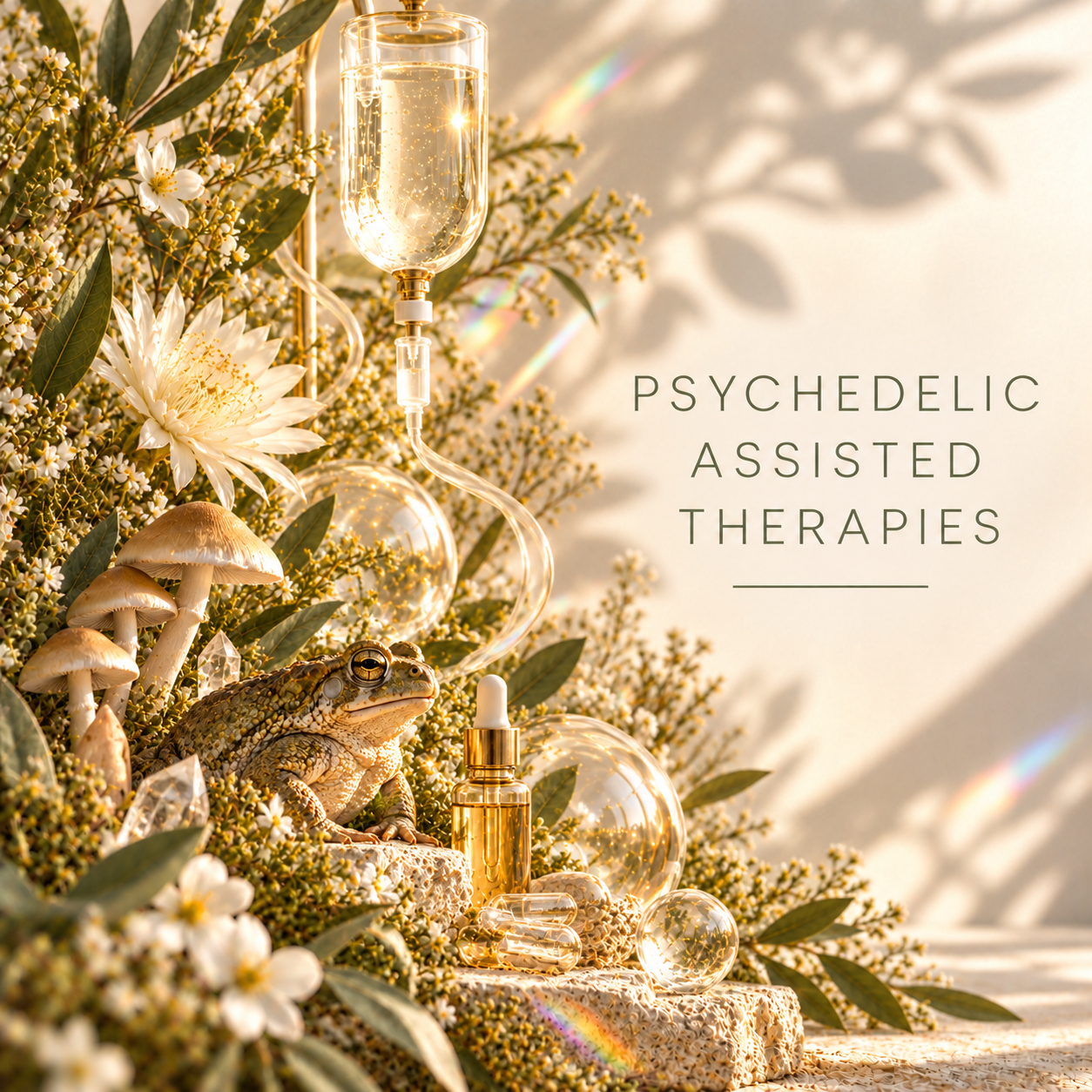
“Psychedelics are a way of shaking up the snow globe.”
— Dr Robin Carhart-Harris
What if the patterns keeping you stuck could begin to shift?
Imagine your mind as a snow-covered hill. Over time, familiar thoughts and reactions carve deep tracks. Even when those routes cause pain, finding another way can feel impossible. Michael Pollan describes a psychedelic experience as "a fresh snowfall that fills all the grooves", creating room for a different path.
That possibility is what makes this space so compelling. For some people, these experiences can open the door to emotions, deeply held beliefs or material that feels outside conscious awareness, bringing unexpected parts of their inner world into focus. What emerges can feel significant, but a vivid image or sense of remembering is not proof of a forgotten event. Creating space for whatever comes up, with skilled support to explore it without imposing an explanation, is just as important as opening the door.
Preparation, a carefully supported setting and meaningful integration matter. Ongoing support helps people translate what they discover into changes they can practise and sustain.
These approaches are not for everyone, but understanding your options can open up possibilities you never knew existed. Explore the science, ask questions and discover what thoughtful, well-supported care can look like.
What's inside
Modalities to Explore
Ancient Plant Medicines
Traditional plant medicines used ceremonially by Indigenous cultures for centuries, including ayahuasca, San Pedro and peyote.
ReadIbogaine-Assisted Therapy
A compound from the iboga plant, studied for addiction and needing close medical supervision because of the cardiac effects.
ReadKetamine-Assisted Therapy
Medically supervised ketamine treatment, sometimes paired with psychotherapy.
ReadLSD-Assisted Therapy
A long-acting synthetic psychedelic, studied for depression and anxiety and currently illegal in Australia.
ReadMDMA-Assisted Therapy
Trauma-focused psychotherapy with supervised MDMA dosing, currently under regulatory review in several countries.
Read5-MeO-DMT-Assisted Therapy
An exceptionally fast-acting psychedelic compound, now moving into late-stage international clinical development.
ReadPsilocybin-Assisted Therapy
Psychotherapy delivered alongside supervised psilocybin dosing. Legal status varies by country.
ReadPreparation work
A psychedelic journey begins well before the session itself. Preparing your mind, body and support team helps you arrive informed and ready.
ReadIntegration work
Structured support after psychedelic-assisted therapy which helps to make sense of an experience and turn it into daily change.
ReadRelated Categories

Educational information only. Nothing here is a diagnosis or a recommendation. Speak with a qualified health professional before making decisions about your health.
