
Conscious connected breathwork
It's the first thing you do when you're born and the last thing you do before you go. Most of us never think about it in between. For some people, this kind of breathwork unlocks emotion, memory and release they can’t reach by talking. Sometimes you don’t even realise something needs to be released. It can be gentle or intense, so start slowly, guided by an experienced facilitator.
What is it?
01Most of us breathe without a second thought. Many of us breathe shallowly, high in the chest, without ever being taught otherwise.
Conscious connected breathwork is a group of practices that turn the breath into the whole session. You breathe deeper or faster than usual, in a continuous loop with no pause between the in-breath and the out-breath. Sessions usually run for at least 30 minutes, are guided by a facilitator and are often set to music. Researchers sometimes call this high ventilation breathwork.
You may have heard of styles such as Holotropic Breathwork or Rebirthing. They share the same continuous, connected breath, but the pace, length and intensity vary a lot from one facilitator to the next. Some sessions are gentle and slow. Others are fast and physically demanding. There is no single right way, and finding a style that suits you matters.
What may it help with?
02Have you ever known you were carrying something, but couldn't find the words for it?
People often come to this kind of breathwork when talking hasn't been enough. They describe it as a way to reach feelings that sit underneath the thinking mind: grief that hasn't moved, tension held in the body, or a sense of being stuck or numb.
Afterwards, some people describe deep emotional release, a clearer head, fresh perspective on a decision or a calm, heavy kind of relaxation. Others describe experiences they find hard to put into words, sometimes compared to a psychedelic state, reached through the breath alone.
Every session can feel different. One may bring tears or laughter; another may simply offer rest. For some, it becomes a regular practice, a way to settle their nervous system and reconnect with themselves.
How does it work?
03When you breathe faster and deeper than your body needs, the balance of oxygen and carbon dioxide in your blood shifts. That change can bring on strong physical sensations: tingling, buzzing, warmth or cold, and tightness in the hands or face. For some people, it also opens an altered state of awareness.
Researchers are exploring what happens in the brain during these states, and whether they help people stop pushing difficult feelings away. That's still being studied.
Your body leads
Some people notice their body beginning to move spontaneously during a session. Feet may move as though running, shoulders may shake, or the body may rock or curl. Some facilitators describe this as a release of held tension. If you’re used to holding everything together, these movements can feel unfamiliar. They may also feel like a relief.
Your hands may sometimes tighten or curl, occasionally nicknamed “T-rex hands”. This is a sign to ease off the intensity and return to your natural breathing, rather than push through. You remain in charge: you can slow down, pause the practice or ask your facilitator for support at any time.
Breath as a daily tool
Longer sessions are only one part of the picture. Shorter, gentler breathing practices can calm the nervous system in minutes, and many people use them before a hard conversation, when they feel overwhelmed, while driving or just as a daily reset. You can explore those in our pages on slow diaphragmatic breathing, box breathing and coherent breathing.
What does the evidence say?
04Many people say this kind of breathwork has changed how they feel, sometimes profoundly. Research into this style is still emerging, and it's growing. Here's what we understand so far and what to consider.
What happens in the brain
A 2025 brain imaging study looked at experienced practitioners during high ventilation breathwork set to music [1]. The more intense their altered state, the more their heart's stress response was activated, and the more blood flow changed in areas of the brain involved in sensing the breath and processing emotional memories. It helps explain why sessions can feel so emotional, although it wasn't designed to test whether breathwork improves mental health.
What people report afterwards
A 2026 international survey asked 324 people from 23 countries about their most recent session [2]. People who had more intense altered states, and fewer challenging moments, reported higher wellbeing afterwards. Those in more intense states also tended to push difficult feelings away less during the session. Because people were looking back on a session they'd already had, this shows a link rather than proof that one causes the other.
Breathwork more broadly
A 2023 review combined randomised controlled trials of breathwork in general, not this style specifically [3]. Across 12 trials with 785 adults, breathwork was linked with small to moderate reductions in stress, with similar results for anxiety and low mood.
What makes it so compelling is its accessibility. Your breath is always with you, and while guided sessions may come at a cost, learning to work with it gives you a tool you can return to in everyday life.
What does a session or practice look like?
05Before you begin
A good facilitator will ask about your health, explain what might happen and agree a way for you to signal that you want to slow down or stop. You can stop at any time. Slowing down, resting or simply breathing normally for a while are all part of the practice, not a failure.
During the session
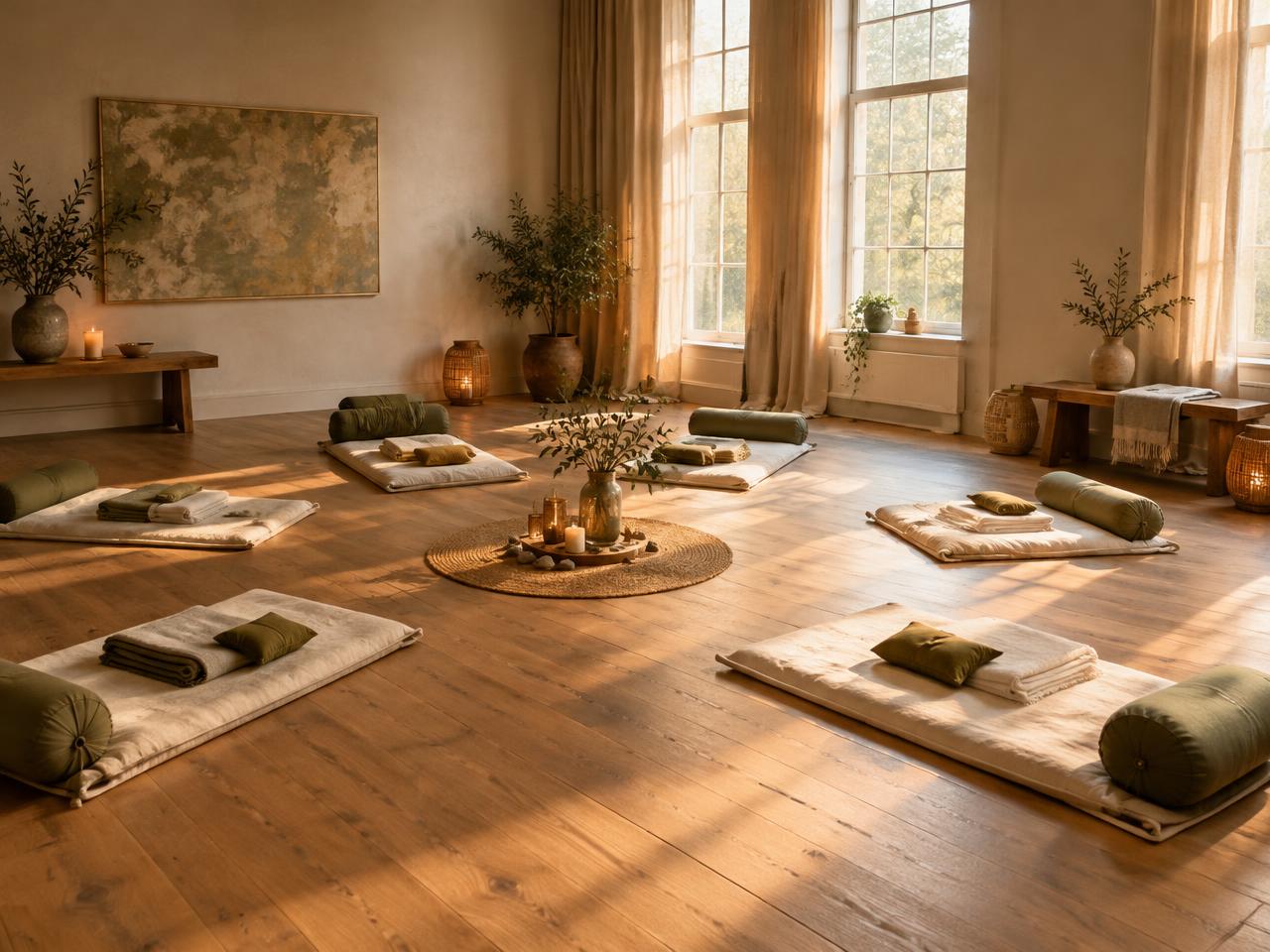
You'll usually lie down, in a group or one on one, while the facilitator guides your breathing, often with music playing. Sessions can run from around 30 minutes to a few hours. Some include short breath holds.
You might feel tingling, changes in temperature, tight hands or a tight jaw. Emotions can rise quickly and unexpectedly: tears, laughter, anger or a deep sense of calm. Your body may want to move, shake or rock. A skilled facilitator will check in with you and help you stay with what's happening, or ease out of it.
Afterwards
Give yourself time to rest before getting up, and before driving. Many facilitators leave space to talk about what came up. Drinking water, eating something and having a quiet evening can help the experience settle.
Starting gently
They don’t call it breathwork for nothing. Some sessions take real effort, and resistance is normal. If you're new to it, a gentler, slower style is a kind place to start. Our founder's advice is simple: go gentle, and find a facilitator who lets you breathe at your own pace.
Risks and considerations
06Conscious connected breathwork can be powerful, and a few simple things help it feel safe.
Choose a facilitator who is experienced, explains what to expect and checks in with you during the session. There's no national registration for breathwork facilitators, so it's worth asking about their training.
Find a style that suits you. Gentle, slower sessions are a good place to start, and you don't have to breathe at anyone else's pace.
You're always in control. If something feels uncomfortable, slow down or return to your natural breathing. Tingling, light-headedness and tight hands are common, and they usually ease when you breathe normally again.
Strong emotions or memories can surface. If you live with trauma, PTSD or a dissociative condition, it can help to have a therapist alongside you and a facilitator who is trauma-informed.
If you're pregnant, or live with epilepsy, a heart condition, high blood pressure or a history of psychosis, talk with a health professional who knows your history before trying faster breathing styles.
Practise this style lying down in a safe place, never in water or while driving.
Questions to ask a practitioner
07- What training and certification do you have, and how many sessions have you facilitated?
- What style do you teach, and can I start gently and go at my own pace?
- Do you screen participants for health conditions before a session?
- Are you trained in first aid, and what is your plan if someone becomes unwell?
- How do you support people who become distressed during or after a session?
- Is your approach trauma-informed?
- Do you work alongside GPs, psychologists or psychiatrists when needed?
You’ve read about it. Now what can you actually do?
You don’t need to have the perfect plan. Choose the next step that feels most useful for where you are right now.
Always speak with a qualified health professional before starting something new. If you are struggling right now, find immediate support.
Want to keep exploring?
Recommended articles, books, podcasts and lived experiences related to this topic.
Explore the LibraryRelated Tools

This is educational information. It is not a recommendation that this approach is right for you. Always speak with a qualified health professional.
