
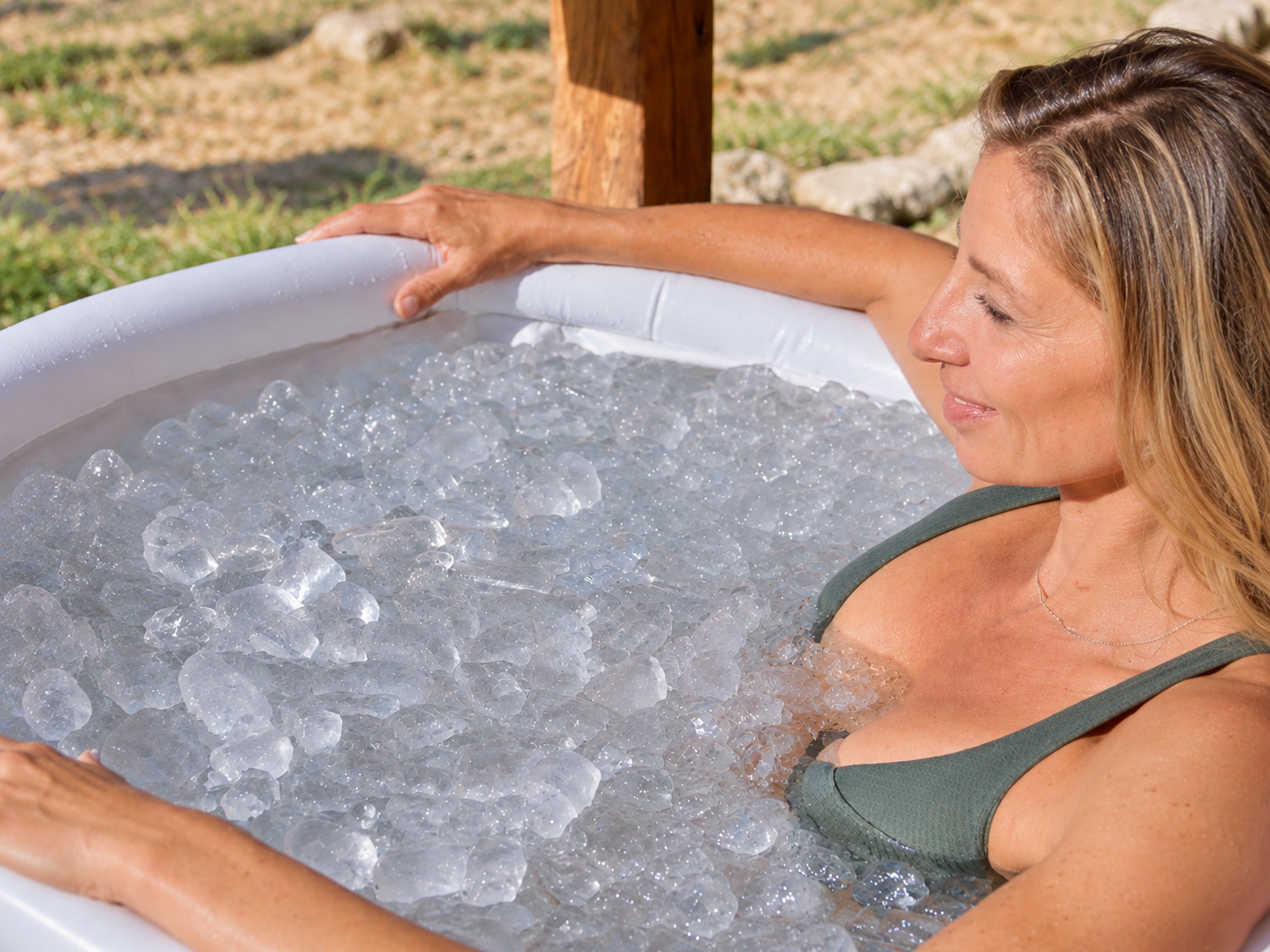
Apparently, somewhere along the way, voluntarily climbing into freezing water became synonymous with optimal health, discipline and having your life spectacularly together. And to be fair, there is science behind the hype. Cold-water immersion creates significant physiological changes, and research suggests potential benefits for recovery, stress and wellbeing.
But there’s an important part of the conversation we seem to be missing: cold is still a stressor. The moment you enter very cold water, your body doesn't necessarily think, Wonderful, wellness. It may think: What the hell is happening? Sudden cold-water immersion triggers the cold-shock response: an involuntary reaction that can include gasping, hyperventilation, increased heart rate, changes in blood pressure and activation of our fight-or-flight machinery [1]. And this is where individual nervous systems matter.
Research has found that acute anxiety can magnify components of the cold-shock response and may even interfere with the body's ability to adapt to repeated cold exposure [2]. Women also deserve more attention in this conversation. Women have historically been underrepresented in some areas of cold-immersion research, while sex, body composition and reproductive hormones can influence aspects of how we regulate temperature. Researchers themselves acknowledge that female thermoregulation during cold exposure remains comparatively understudied.
That doesn't mean ice baths are bad for women, or people with anxiety. The science isn't that black and white. It means the person, the dose and their state going into the cold matter.
I've experienced both sides
At certain times in my life, cold immersion has felt incredible: energising, clarifying and regulating. One thing I still love is briefly putting my face or head into cold water. For me, it can feel like a quick espresso for the brain. But during periods when my nervous system was already highly stressed or shut down, sitting in an ice bath had the opposite effect. Instead of regulating me, it felt like I was shocking an already overwhelmed system even further. That experience sent me looking at the research.
More isn't necessarily better
Exercise is stress. Sauna is stress. Fasting is stress. Cold exposure is stress. A controlled dose of stress that we successfully adapt to may be useful. But more stress isn't necessarily what every body needs at every moment. And you don't necessarily need to sit shivering in near-freezing water for ten minutes to prove you've done it properly.
Research into cold-shock habituation has shown adaptation after repeated relatively short immersions, including studies using three-minute exposures. What we don't have is convincing evidence that increasingly colder or longer ice baths automatically produce greater mental-health benefits. Sometimes a shorter exposure may be enough. Sometimes moving from a sauna into a cool shower may give you the contrast you're looking for without subjecting an already stressed system to an extreme ice bath. And sometimes cold exposure may not be what your body needs that day.
There are also people who should be particularly cautious with sudden cold immersion, including those with certain cardiovascular conditions or abnormal heart rhythms, because cold shock can substantially increase cardiovascular demand.
So are ice baths good for your mental health?
They can be. But that's very different from saying they're good for everyone's mental health, all of the time. Making that blanket statement is a little like saying one medication or one therapy should work for everyone. Human beings don't work that way. Cold exposure can absolutely belong in the Mental Wealth toolkit. I still use it. But it's a tool, not a religion.
So before forcing yourself to sit in ice for minutes because someone on Instagram told you it's regulating your nervous system, perhaps check in with the nervous system you're actually living in. The better question isn't: Are ice baths good for you? It's:
Is this the right stress, at the right dose, for my body today?
Carlie Silva
Founder, The Mental Wealth Hub
