

I have more energy. By day two or three, the fog seems to lift. My clarity comes back online. My body feels lighter. And somehow, despite not eating actual food, I don’t feel like murdering anyone for a steak. By day five, I feel like I could run a marathon. Which makes absolutely no sense to me. How can I feel more energetic, focused and clear-headed when I’m barely eating?
Logically, I should be lying somewhere fantasising about carbohydrates. Instead, my brain feels sharper, my energy feels cleaner and my body seems to have found another gear. There are physiological explanations for some of this, but I’m careful not to turn my personal experience into science. Whatever combination of reduced calories, metabolic changes, rest, nutrition, sleep, nature and removing the usual crap from my system is responsible, the difference in how I feel is extraordinary. Apparently my body occasionally performs better when I stop micromanaging it with food.
This isn’t my first cleanse. I’ve done them before and, for me, they can feel like an extraordinary reset. But there’s an important distinction between what I experience and what science can currently prove. Because “detox” is one of those wellness words that has been stretched almost beyond recognition. Your body already has a highly sophisticated detoxification system. It’s called your liver, kidneys, lungs and gastrointestinal tract. Research has not established that commercial juice cleanses magically flush mysterious “toxins” from the body. A major review found very little convincing clinical evidence supporting detox diets for toxin elimination.
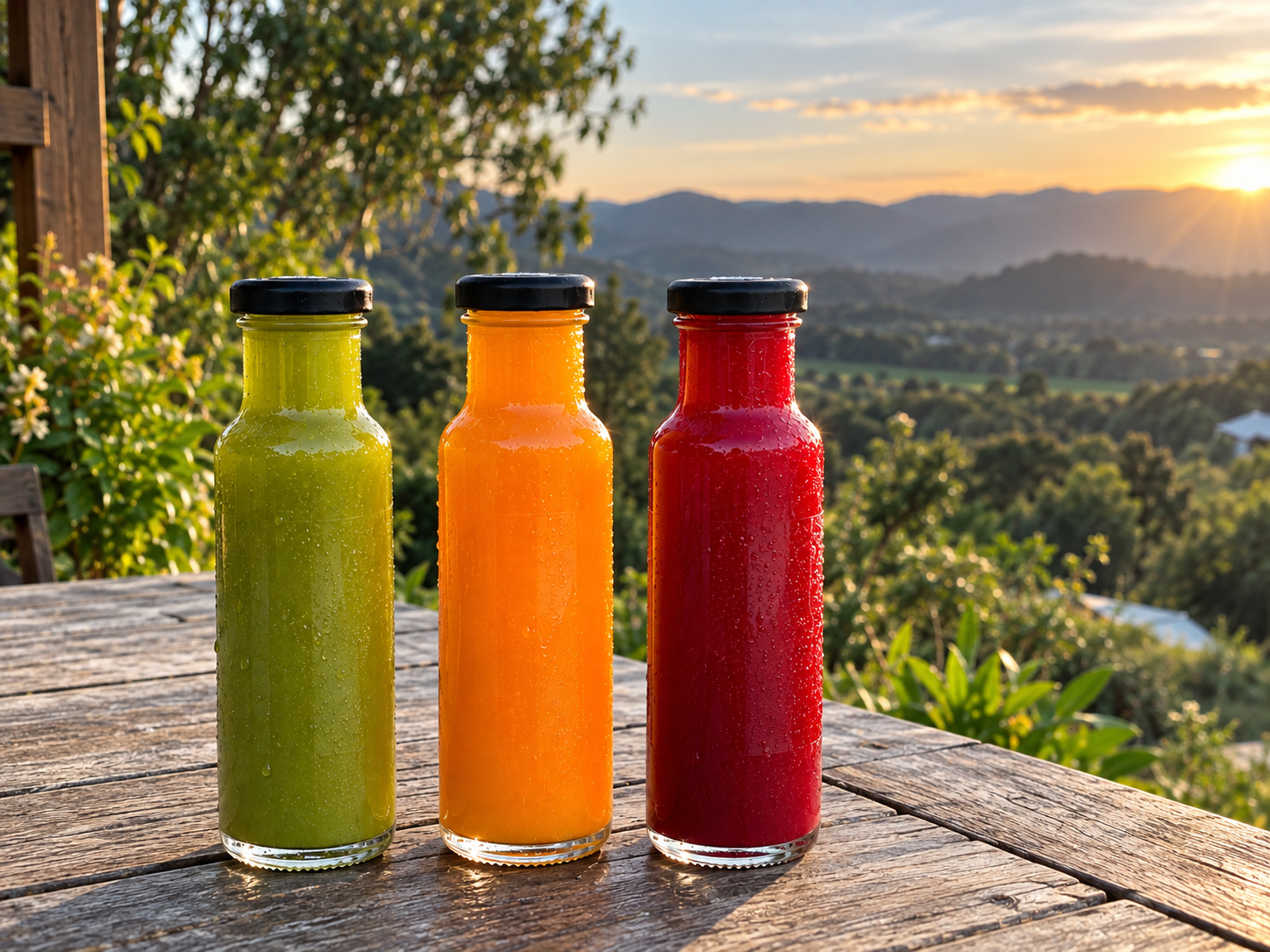
So why can a cleanse feel so bloody good? Part of the answer may have less to do with celery juice possessing supernatural intelligence and more to do with everything else that changes. For several days, I’ve removed processed food, heavy meals and the relentless decision-making around food. I’m drinking vegetable-based juices and broths and using nutritional powders designed to make the program more sustaining. But perhaps more importantly, I’ve booked a container.
A dedicated space where I can properly switch off, step away from temptation and let someone else hold the structure for a few days. I’m immersed in nature, with access to sauna, bodywork, movement, breathwork and other restorative practices. There’s something powerful about removing yourself from everyday life and creating an environment where your only real job is to slow down and let your body do what it does remarkably well when we stop getting in its way. Could I theoretically do this at home? Absolutely. Would I? Absolutely not.
By lunchtime someone would suggest something delicious and my spiritual awakening would be postponed until further notice. There is legitimate science around fasting and periods of significant energy restriction. When food intake falls sufficiently, the body begins changing how it sources energy and regulates metabolic signalling. During genuine fasting, ketone levels can begin rising within roughly 8–12 hours, although a juice cleanse containing carbohydrates and calories is not metabolically equivalent to a water fast. And then there’s cancer research, where things become fascinating but require restraint.
Fasting and fasting-mimicking diets are being investigated alongside cancer treatments. Researchers have observed changes in glucose, insulin, IGF-1, metabolism and immune signalling, and early clinical research is intriguing. But fasting has not been established as a cancer treatment, and systematic reviews still describe the human evidence as limited and inconsistent. For some people with cancer, particularly those at risk of malnutrition or unintended weight loss, fasting may be inappropriate. Juicing itself deserves another reality check.
A small 2025 study involving just 14 people found that three days of juice-only eating produced microbiome changes associated with inflammation, potentially because juicing removes much of the fibre while concentrating sugars. That is nowhere near enough evidence to declare juicing harmful, but it is a useful reminder that “natural” and “scientifically proven” are not synonyms.
So perhaps the real value of my annual cleanse isn’t that juice is performing some cellular exorcism. It’s the interruption. For a few days, I deliberately remove myself from the food, noise, habits and distractions of ordinary life and create conditions where my body gets less input and considerably more attention. Maybe that’s why I return to it. Not because I believe juice cures disease, but because I know how different I feel when I give my body and brain this kind of space. And apparently, I need to pay someone to stop me ordering Uber Eats.
I genuinely wish I had the discipline to do this at home. It would be considerably cheaper, I could do it every three months, and I know plenty of people who manage it. But not me. Put me within delivery distance of good food and eventually my spiritual discipline has limits. Maybe one day. Until then, for me, creating the space to properly switch off and reset from the inside out is worth the investment.
Safety note: Extended or highly restrictive cleanses aren’t appropriate for everyone and can cause dehydration, inadequate nutrition or electrolyte problems. People who are pregnant, have diabetes, kidney disease, eating disorders or significant medical conditions, take certain medications or are undergoing cancer treatment should seek appropriate medical advice before fasting or undertaking a restrictive cleanse. I only undertake these cleanses under professional supervision.
Carlie Silva
Founder, The Mental Wealth Hub
